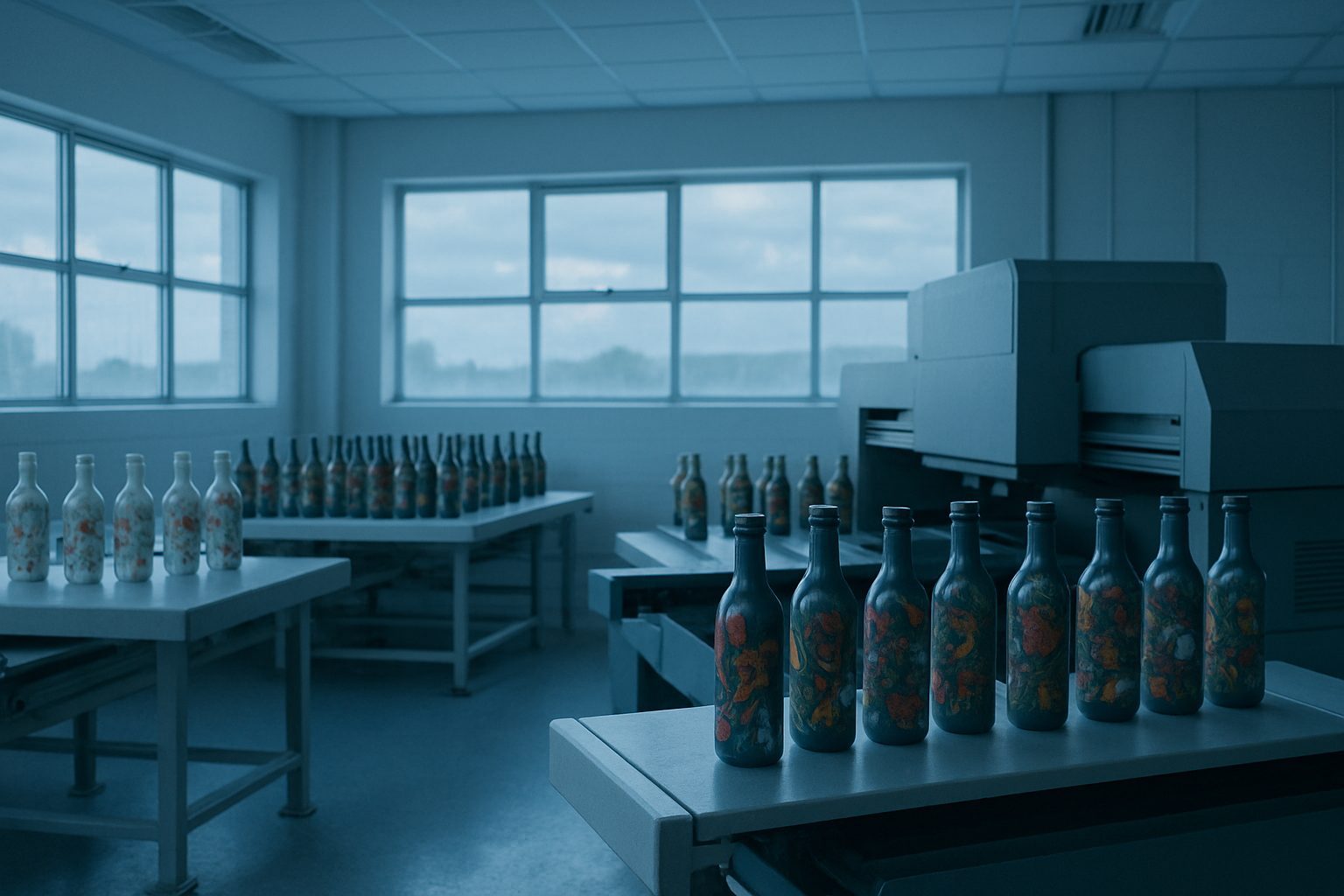
Find all published specs and practical limits for GlassGuard Soft in one place, tailored for South African sites and typical bottle runs. Use this guide to fit your floor before you brief us.
Use Cases · Notes · Contact us.
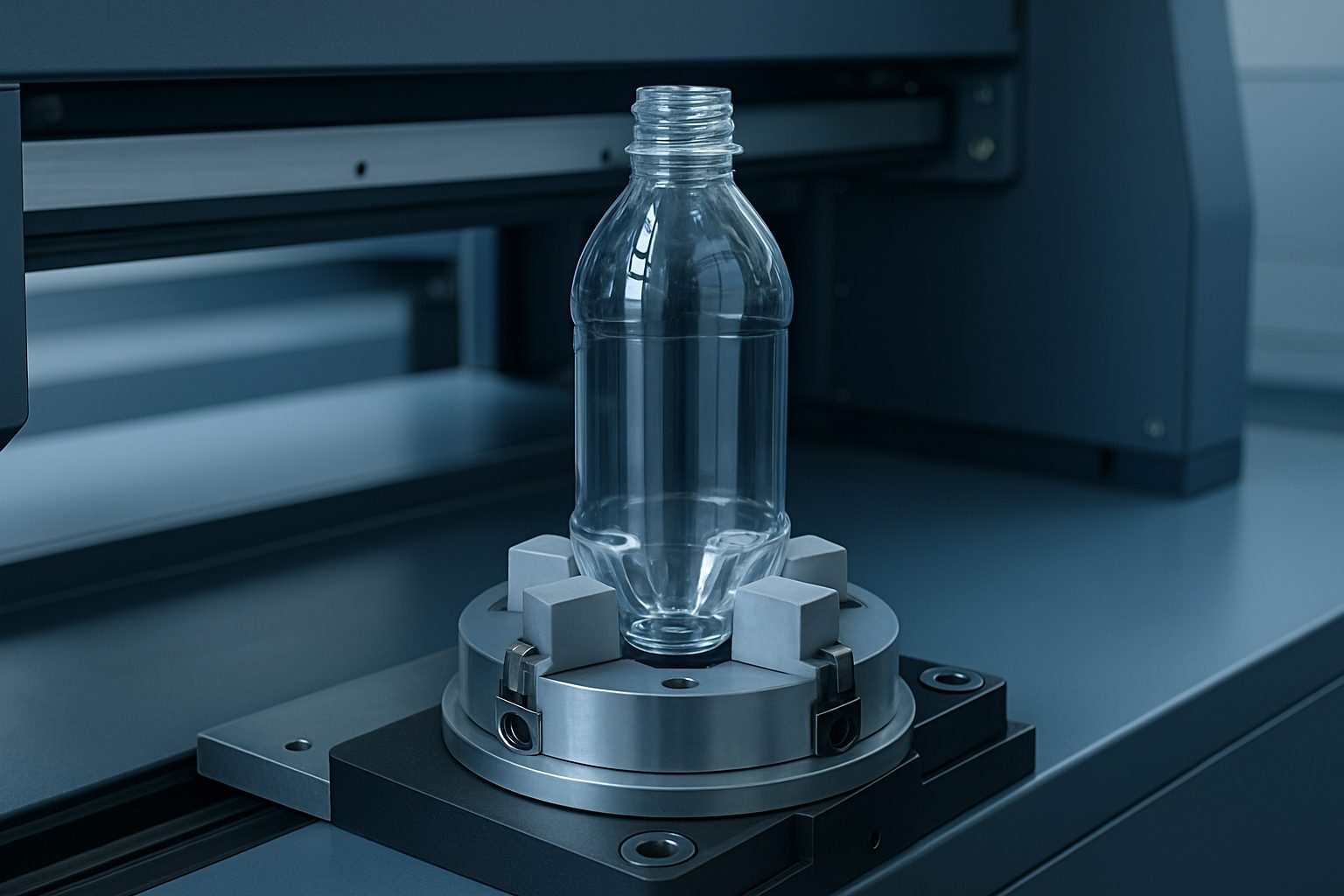
| Pads | Soft elastomer |
|---|---|
| Rails | Modular |
| Diameters | 45,95 mm |
| Clean | IPA wipe |
| Compat | UV Cylinder Pro |
Use our contact form for a tailored footprint.
GlassGuard Soft is our entry-level UV bottle decoration kit, designed for sign and print rooms, craft beverage producers and small promo lines. It suits teams who need Swiss-precise, direct-to-glass decoration without the hassle of labels or shrink sleeves. Typical sites are in Gauteng, Cape Town, Durban and Gqeberha, where consistent bottle presentation and reliable print adhesion matter most. If your line handles short to mid runs, 200 to 5,000 bottles per week, and faces pressure from packing, transport or rough shelf handling, GlassGuard Soft holds its own.
This system is not for high-speed, fully automated lines or where you need in-line drying at conveyor speeds. It is best for bench operators and production floors where the team can manage manual load and unload. If you run a bottling plant with volumes over 20,000 units weekly, or need conveyor integration, consider a heavier system from our catalogue or chat with the team about upgrade paths.
GlassGuard Soft is built for sites with 230 V single-phase mains, which covers most industrial parks and mixed-use spaces from Bloemfontein to Polokwane. The minimum floor footprint is 1.1 by 1.3 metres. Allow extra for operator access, service space and safe air flow. You do not need three-phase power, or special cooling, but you do need a spot that avoids direct sunlight and minimises Highveld dust or coastal humidity. If your site is prone to heat waves or open shutters on windy days, factor that in, as both can affect ink cure and print adhesion. Standard table height fits most shop benches or mobile trolleys.
The machine ships in a crate that clears most loading bays and standard doors. For rougher transport, Durban to Paarl road trips or up steep warehouse ramps, the crate and brackets withstand knocks, but you still want a team to check for shipping bumps before you unbox.
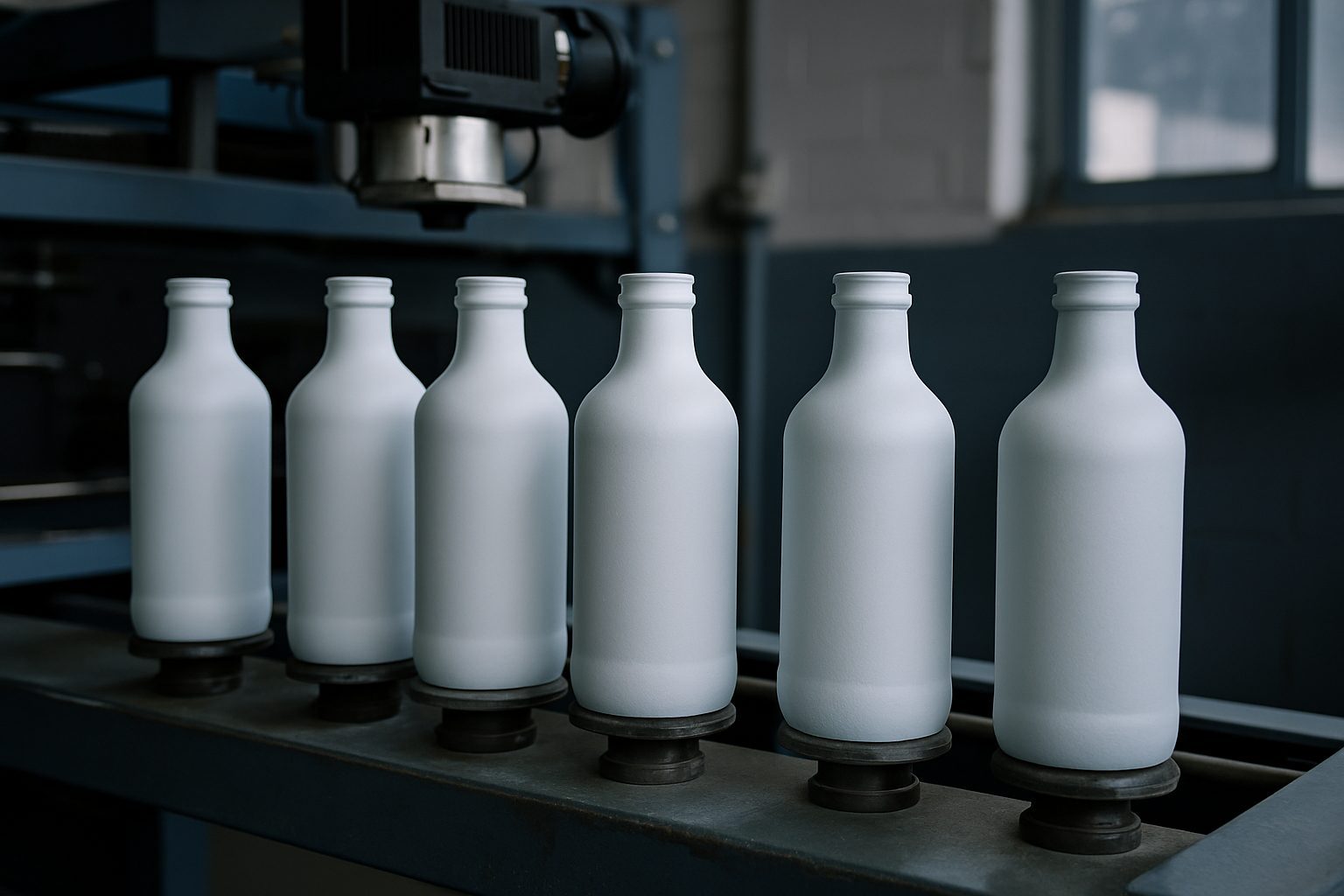
A craft gin producer in Germiston runs weekly batches of 700 bottles, split across two SKU sizes. Operators set up GlassGuard Soft on a bay near the packing area. Bottles are hand loaded into jigs, artwork is selected from the menu, and UV inks are applied directly onto glass. Each batch runs for about 90 minutes. Ink sets within seconds, and bottles can be handled for packing almost immediately. Typical downtime comes from art changes, operator tea breaks or quick routine head wipes. If a label position or barcode panel is required by a retailer or SARS, the team tapes off that area before loading to keep the print clear. The same crew can switch between bottle sizes using the supplied fixtures, with no specialist on call. No artwork rub-off, even after the cases go down the N3 to Durban.
The operator keeps a short log: date, bottle size, finish used, and any hiccups. That note quietly saves rework on the next run.
We answer fastest when your brief covers the technical and site basics. That helps us check constraints and save you a back-and-forth. Photos and a short site sketch beat lengthy specs every time. Put your city in the subject line, timing, especially around public holidays or when shipping through Cape Town port, is always worth flagging. If you have a drawing pack or statement of requirements, attach it, even if it's hand-marked or a scan. We will never ask for perfect artwork up front, but a rough idea of print area helps us catch any bottle or artwork clashes early. For any finish or fixture doubts, include your shortlist, and we will point you to practical fixtures or service options to match.
Teams trip up when they skip the constraint list or forget to check their floor space against the footprint. Over-ordering flashy inks or skipping a fixture trial usually means you will lose a day redoing the job. Bottles with uneven seams or coated glass sometimes need pre-treatment or a different fixture, send a sample if you are not sure. Power cuts, especially with rolling load-shedding, can disrupt a batch, so invest in an inline UPS if your runs are time-sensitive.
Artwork that ignores barcode or statutory marks will come back from the retailer, so always write those constraints down first. If you copy a spec from a European setup, double-check for local humidity and power quirks. When in doubt, email our team at our contact form and we will give you honest feedback from the floor, not a sales pitch.
For more practical tips and real-world fixes, see our notes and recent use-cases.
Verified Google reviews
Our contact form · Sunnyrock applications lab