Craft
No-frills bottle decoration systems for South African craft runs. Quiet, disciplined methods so bottles look sharp from filling to shelf and keep the label story honest.
Read fixturing, cure windows, and browse finishes.
Craft bottle decoration at BottlePrinter Lab is about clarity and survival, not tricks with ink. We focus on small-batch, high-mix lines, think gin, cold brew, kombucha, skincare or limited-run promos, where a rubbed-off logo loses you the repeat order. Our UV systems and fixtures apply colour, white underbase and varnish with attention to edge neatness, tone, and grip, so your bottles leave the floor ready for transit through Gauteng dust or the humidity in Durban stores. Every step is tuned to protect the look and message through handling and shelf rotation.
This setup works for businesses running anything from a few hundred to several thousand bottles, with frequent changeovers and a need to sample new looks. We fit sign rooms and small packing bays with tools and instructions, helping operators control the process without needing a full-time decorator. If your line expects glass, plastic, or aluminium substrate changes or pattern variations every week, this approach keeps things disciplined and repeatable.
Craft bottle decoration suits owners and operators who want control over the look and durability of each batch, but who do not have the volume to fill a 24/7 line. Small distilleries, soft drinks, niche skincare, and short-run promotional packaging see the most value. It is for operations where the next order could be a different size or substrate, or you need to show samples to a store buyer in Polokwane or the Waterfront.
If your business needs millions of identically printed bottles, or you want the absolute lowest cost per unit, this route is not a fit. It is also not aimed at high-gloss foil or embossing effects that require specialist finishing houses. Our kit is for honest, practical results, durable, presentable, fast to adapt, absolutely focused on the South African craft and boutique market.
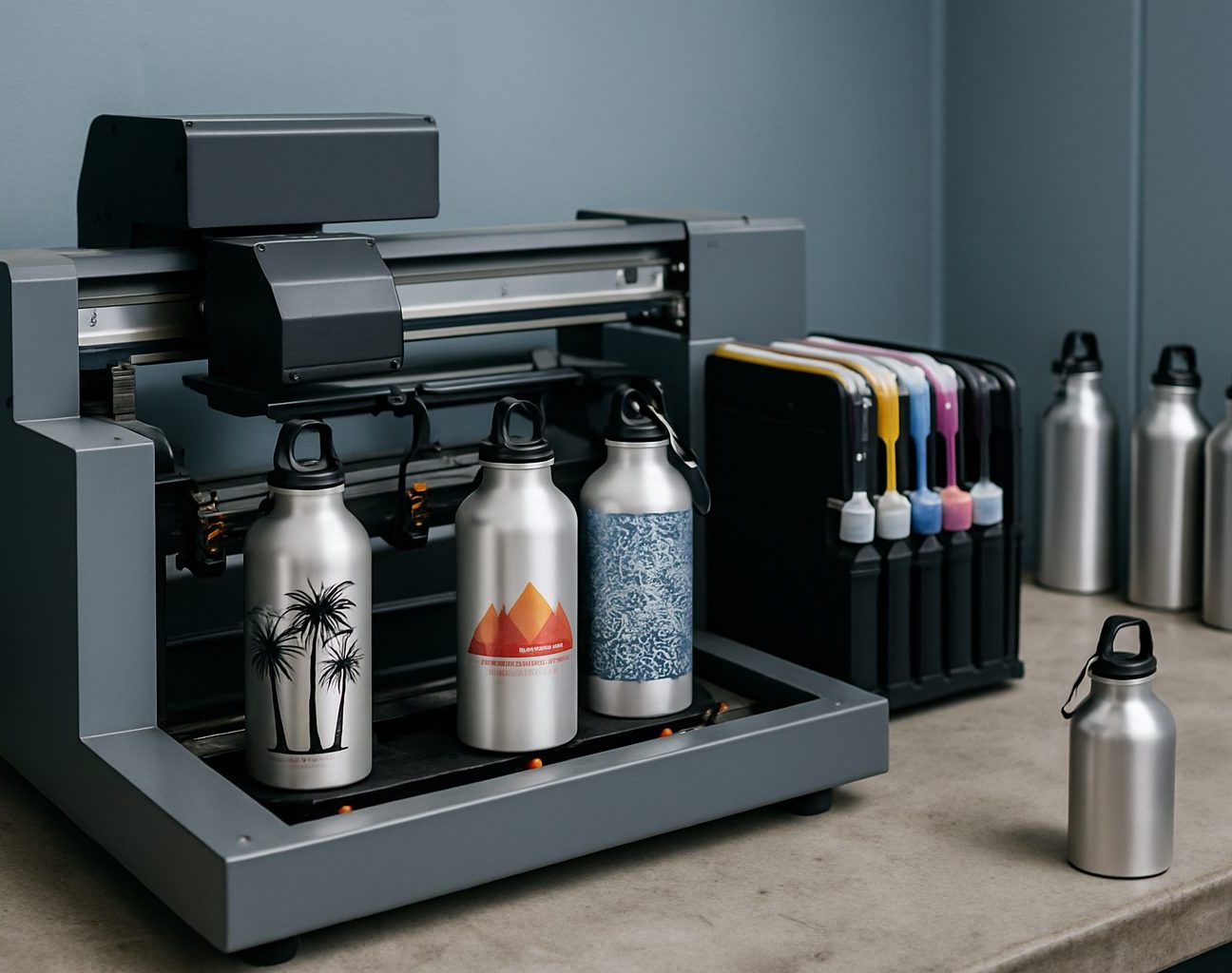
UV craft decoration starts with the right fixture for your bottle’s shape. We use soft jaws and inserts to keep bottles steady without marking. A white underbase gives bold colour on amber or green glass, or when printing light text on dark bottles. Each batch is varnished and cured with UV for a finish that holds up to packing at source, road or rail transit, even if you’re sending stock to a windy Free State liquor store or a coastal Cape Town shelf.
Our cure logs document lamp hours and spectra, giving operators proof of cure for each run. This is not just for quality: retailers and auditors like to trace samples back if a finish rubs off. Most operators track finishes by batch and can send us a cure log with any query. We help you match the right ink, fixture, and settings for different substrates and order sizes, adapting to load-shedding downtime and local supply chain hiccups.
A Pretoria-based craft gin maker has a 750 ml amber glass bottle with straight sides, used for seasonal runs. They supply 700 units for a Gauteng bottle store chain, plus 100 sample bottles for trade events in Durban. The owner emails us to check which fixture jaws and UV recipe to use. After reviewing the bottle spec, we recommend a white underbase, a two-pass logo print, and a soft matte varnish. The operator logs the cure hours and sends photos of test prints to us for verification. The result is a set of shelf-ready bottles where the print does not smudge during loading, and the look carries the brand story through each hand that handles it before sale.
You can see more finishes suitable for craft runs or browse our catalogue of fixtures and sample kits for more examples.
When you contact our team at our contact form, a little prep saves you time and helps us give a straight answer. We do not ask for stacks of paperwork, but certain details help us match your bottle and finish to the right fixture and cure window. If you are running trials for a new outlet, we can usually suggest a workable starting point with the info below.
Many craft operators underestimate how bottle shape affects fixturing. Small changes in base or shoulder diameter can make jaws slip or squeeze, especially in mixed cases from several suppliers. Testing with real samples avoids downtime later. South African conditions, like lofted Highveld dust or salt air, can affect adhesion if bottles are stored open before print. Ask us about pre-cleaning if your site is in an industrial park or close to a coastal road.
Ink supply can be a problem when ports are slow or load-shedding hits the warehouse in Bloemfontein or Gqeberha. We recommend keeping a small safety stock and logging each batch in your cure record to help with support later. If unsure, email us at the lab for a prep checklist or advice from someone who’s seen your kind of floor.
Our contact form · Sunnyrock applications lab