Compare PromoRun Kit specifications here, with numbers and options kept practical for South African print and sign rooms. Match constraints and avoid costly errors in your next bottle run.
Use Cases · Notes · Contact us.
| Cases | 2 flight |
|---|---|
| Formats | Promo bottles |
| Templates | Art boards |
| Book | our contact form |
| Demo | All showrooms |
Use our contact form for a tailored footprint.
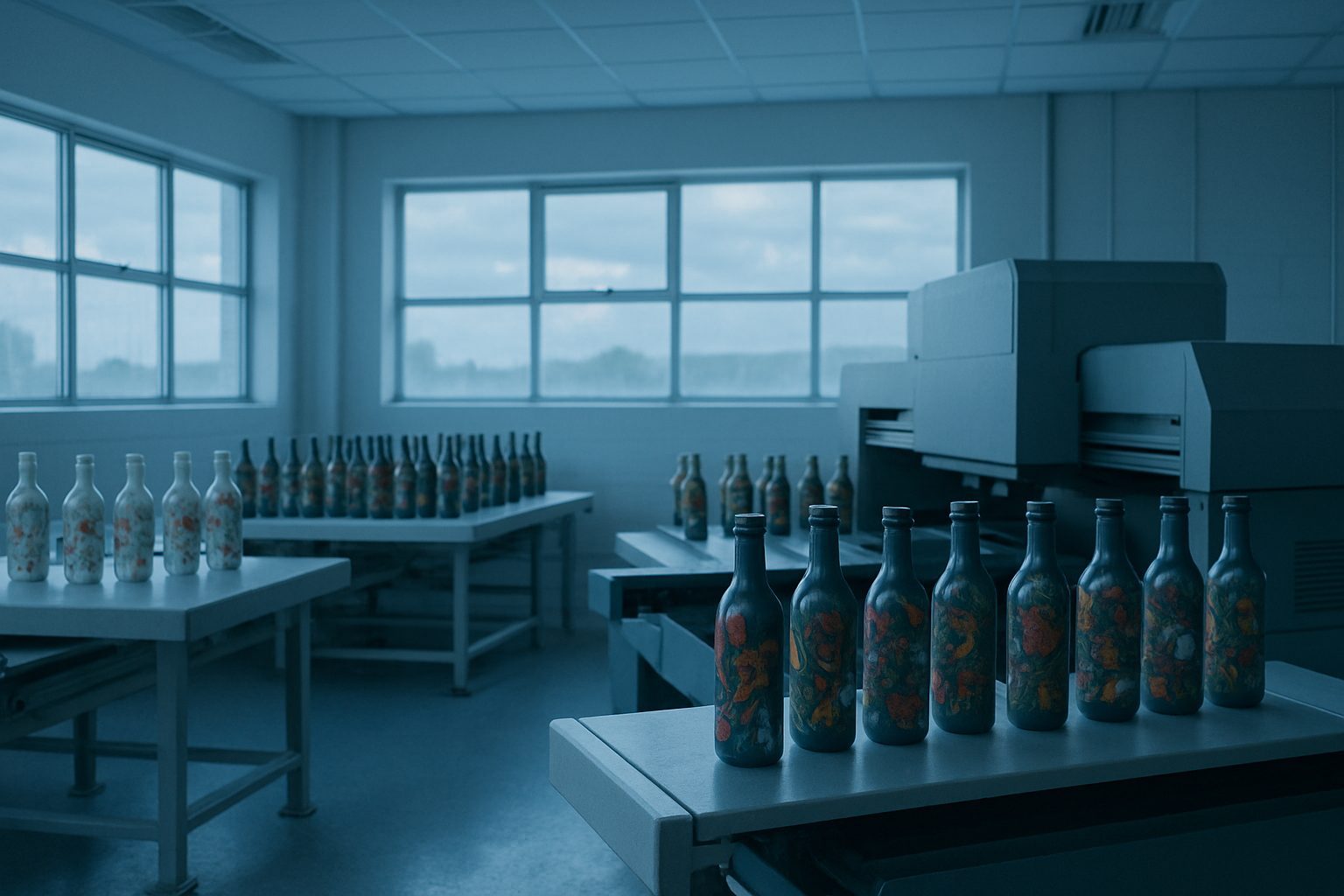
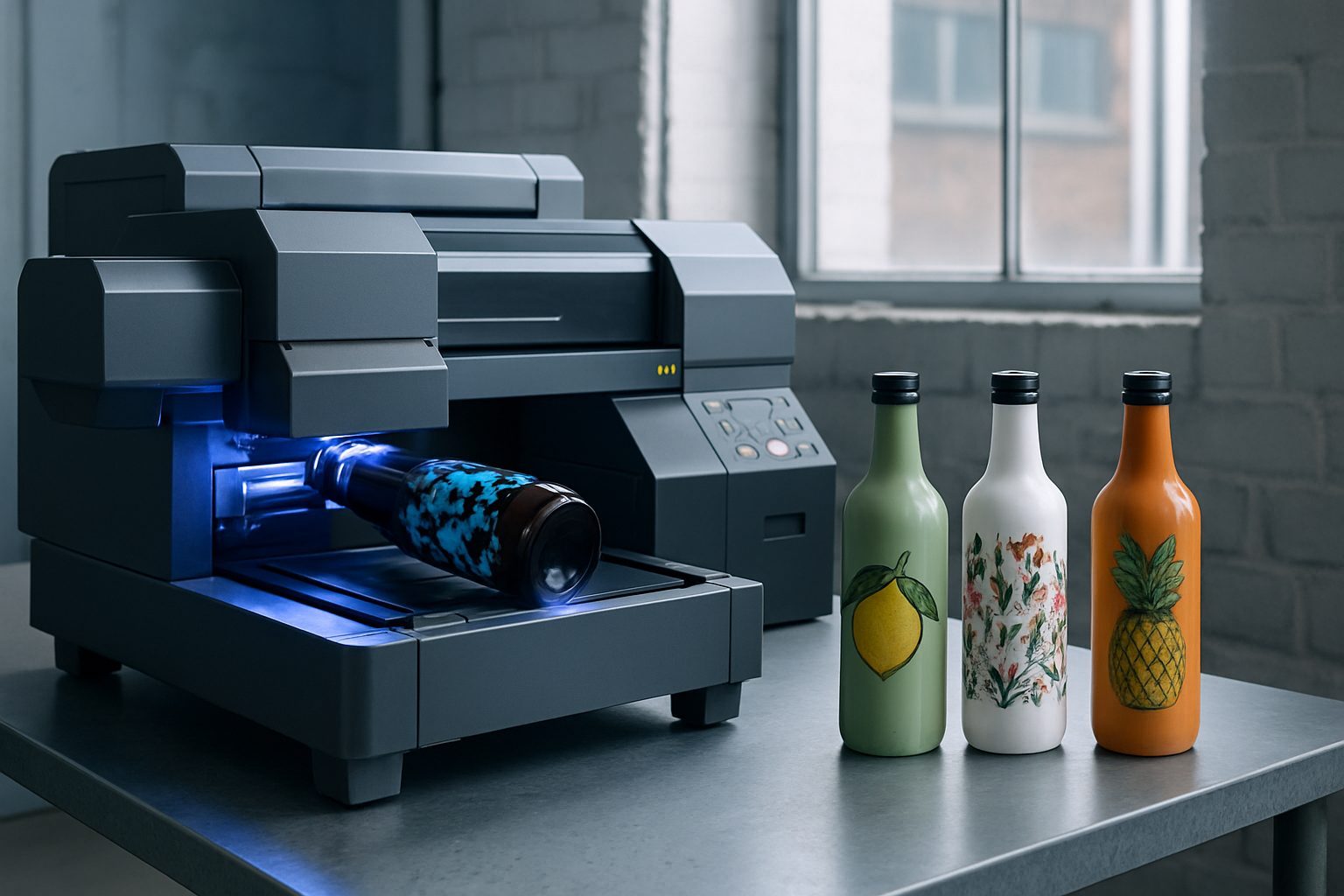
The PromoRun Kit is our workhorse UV decoration solution for bottles, jars and flasks in craft beverage, skincare, and promotional lines. Designed for small to medium production floors, it fits Gauteng sign rooms, Cape Town promo labs, and even compact units in Durban. If your work runs between the 50 and 800 bottle mark per batch, where seasonal lines or high-mix short runs are normal, this is the kit most shops turn to. It suits teams that need Swiss-precise print heads and SA-honest support more than a global badge or flashy extras.
The system finds its place where packaging must look sharp from first delivery to shelf edge, and bottles may need to handle Highveld dust, coastal humidity, or a few weeks in a non-climate-controlled storeroom. If you print for tough transit, retail rotation, or hand-labelling lines with lean staff, the PromoRun Kit keeps marks crisp without rub-off. Large bottlers running high-speed lines or fully automated plants might want to look up the next size in our catalogue, as the PromoRun Kit is tuned for manual or semi-manual lines, not full auto.
Every PromoRun Kit ships built for 230 V mains and three-phase supply, with South African plug and play compliance. It tolerates load-shedding gaps and generator thump better than most imports, but your panel must be earthed and no water pans below the rack. On the floor, the footprint is under two square metres, with a clear zone for operator access and box movement. Teams in industrial park units, small-scale food labs, and municipal spaces fit the kit without needing new foundations or venting.
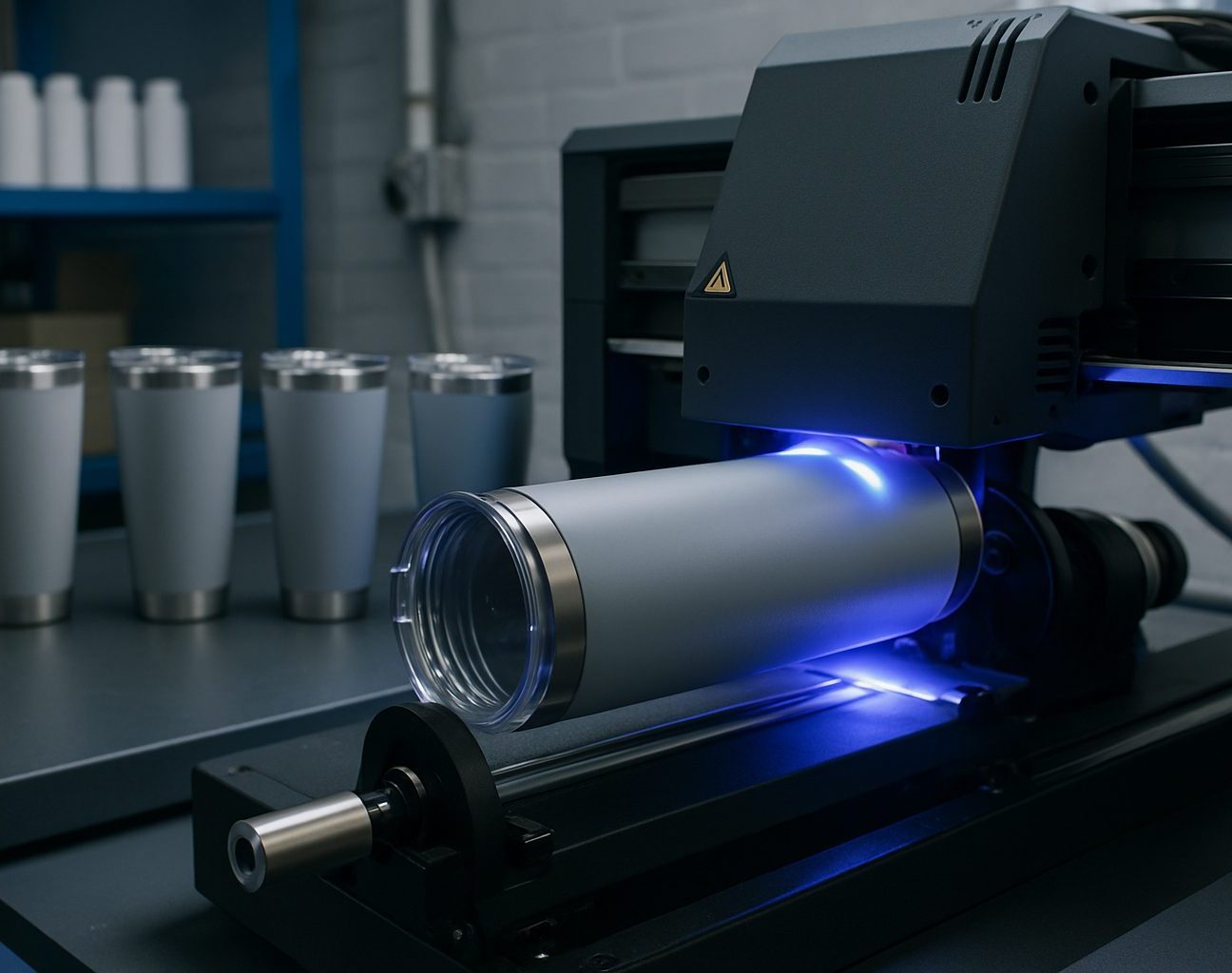
Print runs rely on a core UV print engine, modular fixtures sized for the usual bottle or jar shapes, and inks tested for both glass and aluminium. Fixture changeover needs a spanner, not a service call. Most local crews run the kit with one operator and a pack bench, and typical output is one rack per 6-8 minutes, with minor clean-up between types. If your floor has tricky ventilation, high humidity, or stray powder from another line, flag it in your brief to us so we can match correct filters or guides.
You will find the published system dimensions, clearance, power draw and print window below. All sizes are boxed for usual courier routes from Germiston to Durban, Gqeberha or Bloemfontein. Most teams choose between three fixture trays, depending on bottle neck, base and closure style. If your product is non-standard, list the constraint first (such as, 'must clear a 91 mm shoulder' or 'handles 640 ml glass growlers'). Picking a fixture that fits the operator's rhythm beats chasing the theoretical fastest unit.
Standard print envelope: 125 mm high x 80 mm diameter. Prints round, oval or square bottles in glass, PET and aluminium. Total installed kit space: 1.8 square metres including operator lane. Power draw: 1.5 kW at peak. Panel: 230 V single or three-phase. Ambient working range: 12°C to 35°C (Highveld summer to Cape winter). All switchgear on local standards. Inks: UV-cure, spot and process, with matt, gloss and custom finish options. No compressed air needed. The kit comes pre-packed for easy fork or pallet jack offload, or hand-unload if you email ahead.
Say a Durban label room needs to decorate 400 200 ml glass dropper bottles for a store launch, all in under three shifts, with temperature and humidity peaking above 90%. The brief: labels cannot peel or smudge once boxed, and bottles are hand-wiped, not tunnel-washed. The foreman checks the 80 mm diameter spec, clears the height, and chooses a mid-size fixture tray. They list the number of racks, total run time, and which finishes to approve. After emailing us site photos and a hand sketch, they get a reply confirming which ink set resists both coastal moisture and finger oils, and the changeover time for bottle necks. The kit rolls into a back corner and runs on normal single-phase, with one extension lead. No rewiring, no extra venting, and local support for any jam or miss.
A good brief means faster, more precise answers and less time chasing corrections. Write your constraints and what cannot change, then pick options for finish and fixture. If you are not sure, a photo or two from your floor with the bottle types laid out in a row is enough to get a practical answer from our team. Extra drawings or a previous statement pack help but are not needed for first contact. Clarify your city, timing, critical specs (such as power or bench space), and mention any oddities like previous ink problems or power trips.
Rushing to pick a fixture or ink set before nailing down your site's constraints usually means extra fees or a redo visit. Do not guess your panel size, clear operating space, or bottle shape, write them down and include them in your brief, even if the list is rough. The most common misses are underestimating the space for bottle turnaround, skipping a check on three-phase versus single-phase, or not mentioning quirky bottle features that trip up standard trays. If you have had a finish rub off or a jam with another machine, name it upfront so we do not repeat the same issue. We keep short notes on past fixes, so your brief gets routed with what flopped last time already in view. For more specifics on compatible fixtures and accessories, check the detailed fixture notes, or email our office at our contact form.
Verified Google reviews
Our contact form · Sunnyrock applications lab