Straightforward UV Cylinder Pro specifications for teams needing honest numbers, local-fit advice, and practical ways to avoid expensive mistakes in South African production.
Use Cases · Notes · Contact us.
| Format | Cylindrical glass / PET |
|---|---|
| Diameter | 45,95 mm typical |
| Cure | LED UV logged |
| Footprint | 1.8 × 0.9 m |
| Throughput | Sample to short-run |
Use our contact form for a tailored footprint.
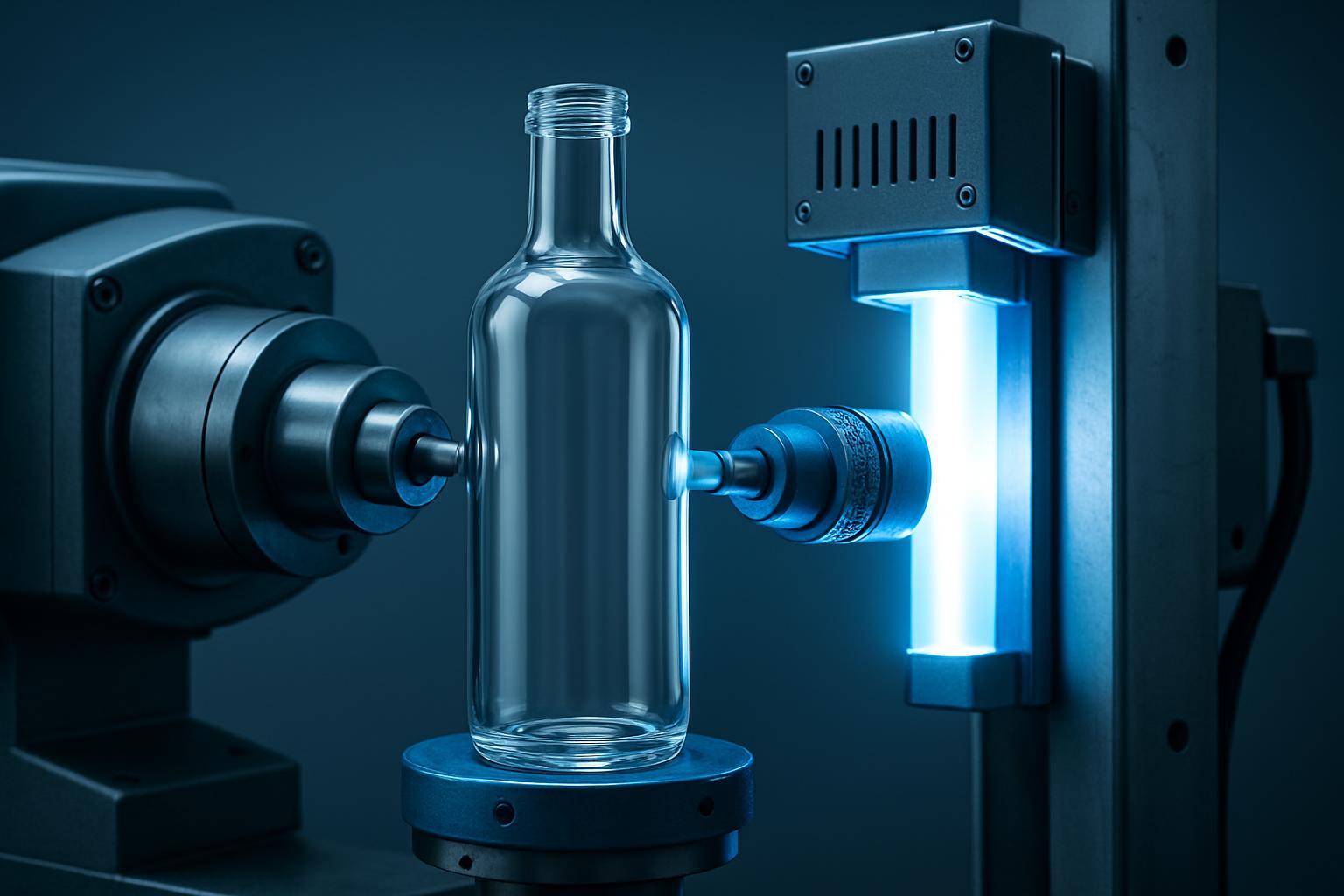
The UV Cylinder Pro is a dedicated bottle and cylindrical container printer, purpose-built for the on-site demands of South African businesses bottling craft spirits, kombucha, skincare, or chemicals. It prints full-colour digital designs straight onto glass, aluminium, or coated plastic bottles, using UV-cured ink. This is not a multi-purpose machine. It’s built for teams who need branded, durable bottles that survive shipment from Bloemfontein to Gqeberha, or display handling in a Cape Town pop-up. If you want quick brand changeovers, on-demand samples, or have transit and shelf-rub risk, this system may suit you. If you only do flat items, or your runs are millions, it’s overkill and a different solution will fit better.
Set up is direct, your operator loads bottles on motorised rollers, locks the fixture, and queues the print via touch panel. Standard power is 230 V, three-phase ready for Gauteng floors or coastal sheds. Print area is up to 360 mm long and fits diameters from 40 to 120 mm, enough for most local beer, water, or lotion bottles. Footprint is about two pallet spaces, so you will want clear metre lines around it, especially with load-shedding pack schedules or shared print rooms. Most teams need a full trolly or two for incoming blanks and a safe shelf for finished goods, don’t crowd the bay or print will suffer under local dust, especially on the Highveld. The ink is formulated for local humidity swings and can handle both Cape Town summer and Durban stickiness, which matters if your bottles land in both.
Pretend you’re a skincare producer in Germiston, filling 80 mm diameter glass jars for retail. Your team wants direct print, not labels, but your site has only single-phase power and you run morning shifts to dodge early afternoon load-shedding. With the UV Cylinder Pro, you’d check if your jars fit the diameter range and confirm print length covers your artwork. You’d prep a small rack for finished goods and avoid jamming another large unit into the print bay. With specs to hand, you see you’ll need a step-up transformer or to add a circuit for three-phase if you scale. That means the operator can lock in site fit now, not after installation headaches.
You don’t need a full tender pack, but bringing the right information upfront cuts out two weeks of back-and-forth. Your team’s real site constraint is what matters, not brochure numbers. To quote with substance, we need hard details matched to the spec sheet.
A common pitfall is assuming brochure numbers are a fit for local conditions, Highveld dust, municipal supply drops, or Cape coast air all matter more than you expect. Teams sometimes forget to check if their biggest bottle fits, or only measure the first batch and not the odd outliers that arrive next. Rushing a fit can lead to the wrong fixture or ink, meaning a second site visit, an urgent reprint, or a scramble just before export. Rely on the specs, but check every constraint. When in doubt, pick the simpler option your operators are already used to, not the flashiest, as this ages better for local teams.
If these specifications cover your questions, see UV Cylinder Pro fixtures & accessories or our Use-cases for application notes from similar teams. For firm advice or a detailed quote, send a message through our contact form with your checklist, photos, and timing. Our team will answer with a practical sequence based on your real-world constraints, not a recycled brochure. If your project changes, browse our Catalogue or Notes for adjacent options before you decide.
Verified Google reviews
Our contact form · Sunnyrock applications lab