Note

Showroom demos that convert

Good showroom demos set up real orders, not just polite compliments. See what we show, what to prepare, and how to avoid common mistakes before a Sample Lab Day.

Keep exploring

Use Cases · Systems · Contact us.

Touch the fixture

RingGrip jaws on the table beat slides.

See a cure log

CureCheck PDFs make adhesion real.

Book our contact form

Demos end with a calendar hold.

What makes a demo convert in South Africa

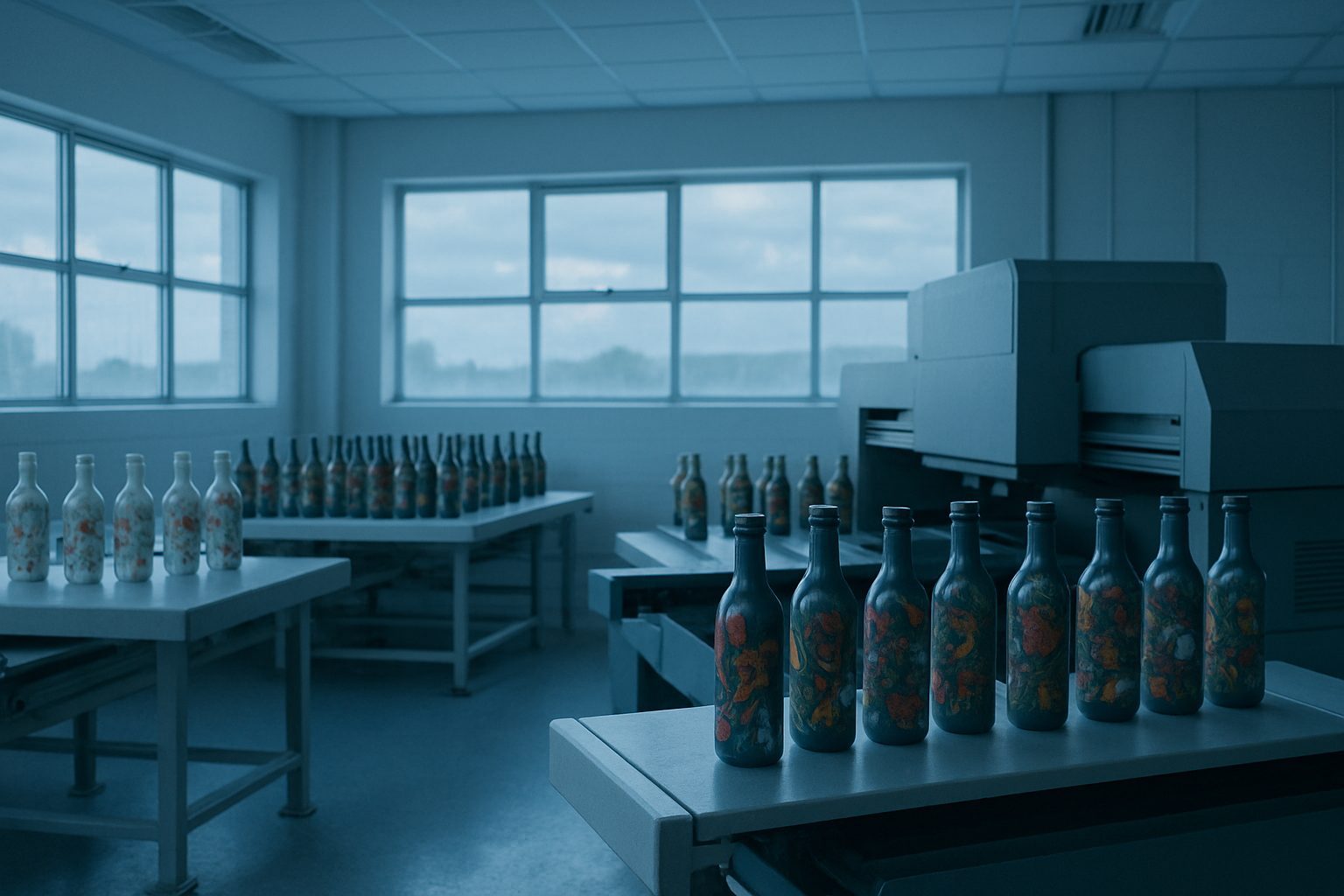
A demo that converts is more than a nice finish on a bottle. It answers blunt questions before the Sample Lab Day, so nobody is caught off guard when the real job lands. In Worcester, Pretoria, and the industrial parks around Germiston, owners and operators want a sequence they can brief straight to their own crews, not a string of back-and-forth calls. Each site throws up its own mix of hurdles: a narrow Goods In gate, load-shedding, three-phase that trips, or a security window that closes by 15:30.

If you work in craft drinks, skincare, or promos and need decoration that survives packing, transit and shelf handling, you need the demo to show not just the shine, but the weak bits. That is what stops expensive repeats later. Our notes focus on bottle sizes up to three litre, PET or glass, with or without a seam. If your business only deals with plain cardboard boxes, or needs a fast rework for a tender and cannot spare an operator, a demo may not fit. You need a process that your own floor can maintain, not just a sales pitch.
How our team runs an effective booking demo

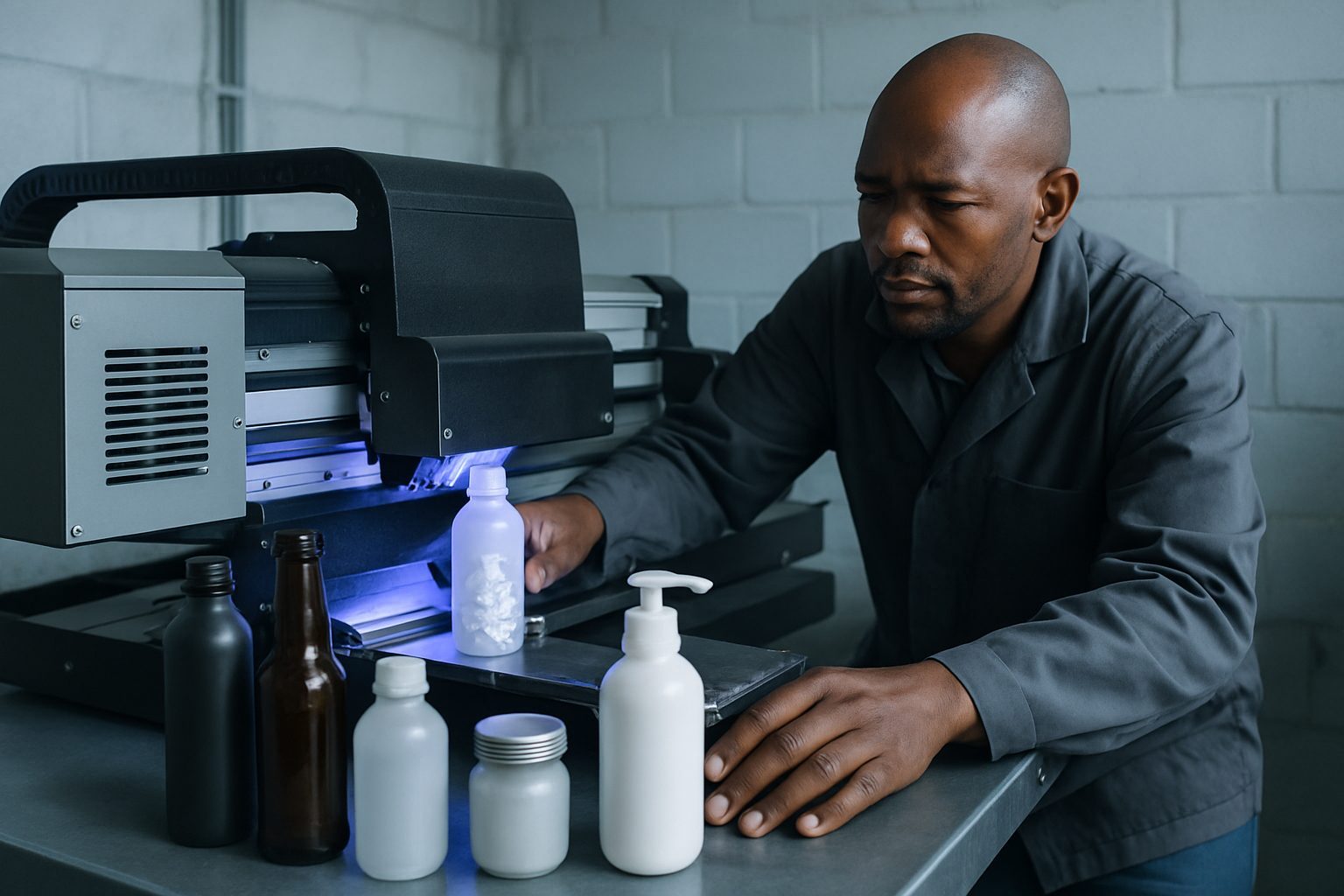
Before we invite you in for a Sample Lab Day, our Jet Park sample bay team walks through the real sequence you will need on your floor. We start with the site or process constraint. That could be tight access, shift overlap, limited 230 V slots, or who has the final say before production starts. Only once the real-world problems are written down do we set up the right machine, finish and fixture for your needs.

On the demo day, you see the actual process, not just a glossy sample bottle. You stand with the operator, follow the brief, and see what can delay the job in a real shift. Our approach is factory-floor honest. If the ink takes longer to cure in winter Highveld conditions, or if a coastal fan brings in humidity that throws off adhesion, we say so. There are no skipped steps or mystery settings.

A practical demo day: Worcester brewery example

Recently, a brewery from Worcester brought in a mix of stubby glass and tall PET samples. Their main concern was keeping print sharp under shifting load-shedding and short staff shifts. We started by reviewing their delivery block, only 1.8 metre clearance and a tight L-turn into the store. That ruled out one finishing fixture straight away.

Together, we ran through the bottle prep, checked power stability, and timed the print for an actual weekly shift. Their operator signed off, and we left a one-page close-out note, noting the need to check ink viscosity every lunch break. By the afternoon, they could brief their local contractor without confusion or extra meetings.

Who does not suit this process

A demo-focused approach is not ideal for all teams. If your workflow relies entirely on imported pre-decorated stock, or your operation cannot allocate an on-site owner to walk the plan, the benefit drops. Crews who never handle machine changeovers or only work with sleeves may not get value from a UV system demo.

The process is set up for teams who like to brief their own operators or contractors, handle SA-specific power and site quirks, and want to avoid surprises that slow down local production. If your biggest concern is price per bottle and you are not involved in the process, a sample pack from the catalogue or a basic system overview may be enough.

What to prepare before emailing our contact form

We give straight answers up front so you can brief your own floor without confusion. Sending clear details up front saves both sides time, especially when your next run is due before the next load-shedding slot.

A good demo booking always starts with a specific constraint, the right bottles on hand, and a clear site contact. The more honest your brief, the fewer snags later. A drawing set or a messy statement pack helps, but two phone photos and a timing window are usually enough to get started. If you are not sure what counts as a constraint, look at where your last trial or order hit a snag.

Pitfalls and common traps to dodge

The most expensive mistakes come from skipping the hard bits: ignoring site access, assuming someone else will sign off, or leaving the process details fuzzy. Do not pick your finish, fixture or ink before writing down your floor's constraint. If you guess, you usually pay in rush fees, repeat visits, or bottles that do not survive transit from Cape Town to Polokwane.

We record what failed last time and share that knowledge, even the awkward points that shiny brochures skip. When in doubt, ask for a walkthrough, and see more detail on our systems and use-cases pages. Email questions through our contact form mentioning 'Showroom demos that convert', our team will answer from the Jet Park sample bay.

Talk to BottlePrinter Lab

Our contact form · Sunnyrock applications lab