Resource
Here we set out practical care and replacement for GlassGuard pads on UV bottle decoration systems. Follow these steps for artwork that survives handling, shelf shifts, and local conditions.
For a tailored pack, use our contact form.
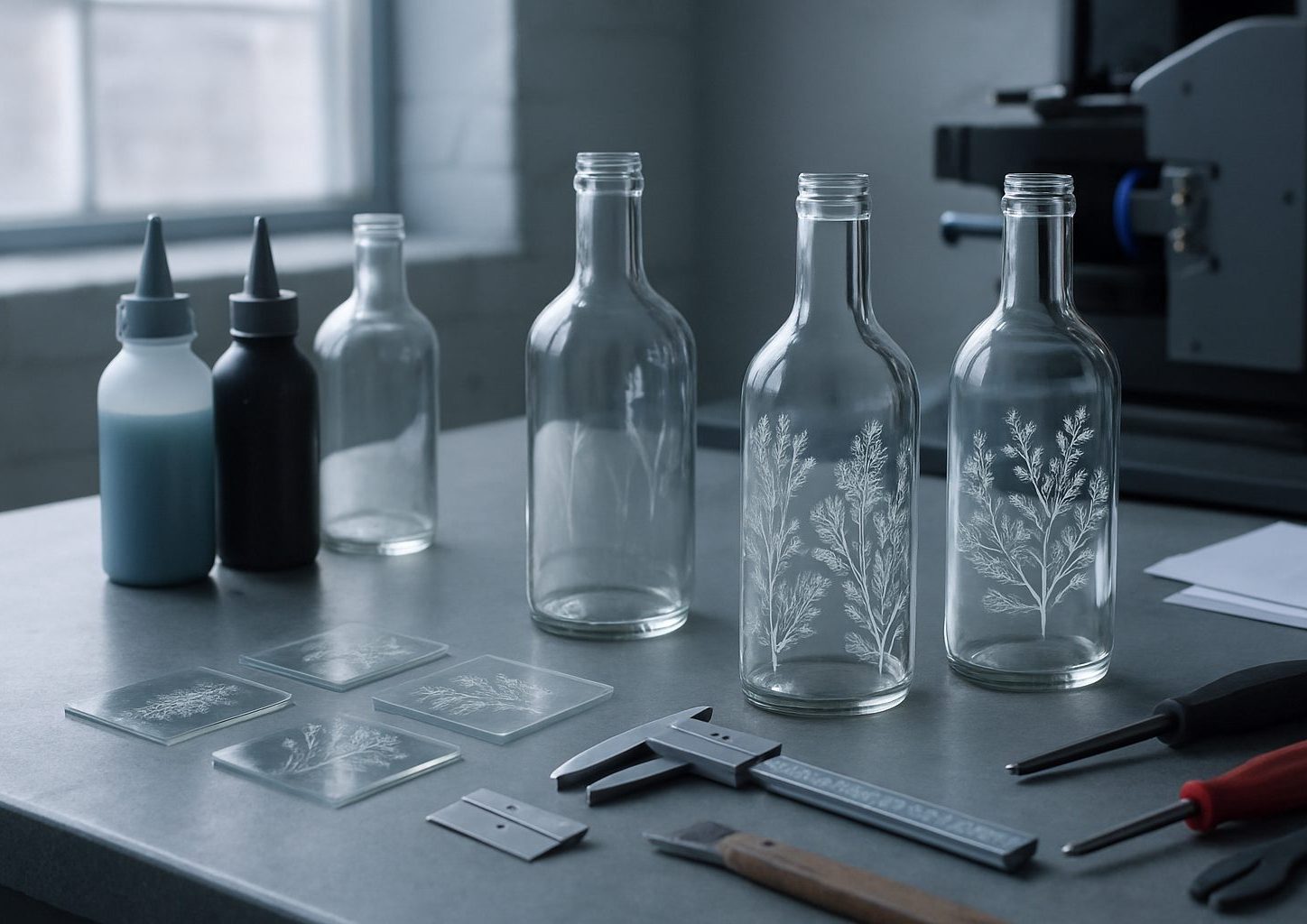
GlassGuard pads are fitted to UV bottle lines to protect both the bottle surface and the print head during decoration. These pads take the brunt of friction, ink splatter, and stray dust, especially after a few busy weeks on the floor. Designed for sign rooms and production benches working with glass, coated aluminium, or tough plastics, they suit teams who need reliable runs in Gauteng’s industrial parks as much as smaller shops in Polokwane or a Durban label centre. If your operation deals mostly with untreated poly or uses only direct-to-sleeve systems, these pads may not fit your workflow.
Most South African workshops cope with Highveld dust, draughts through roller doors, and the odd damp spell. A consistent pad care routine keeps prints sharp and rejects low. The main two points are regular pad replacement and using 99% isopropyl alcohol (IPA) wipes between long jobs. Over time, ink build-up, capillary creep, and environmental grit mean pads must be replaced. Operators should keep notes in your cure log template, especially if you run several bottle sizes or switch between ink types.
In a Germiston label shop running UV printing for olive oil bottles, the operator notices a faded patch on test prints during a sample day. After a visual check, the GlassGuard pad shows slight hardening from last week’s 16,000-run and some packed dust from the last load-shedding cycle. He dons nitrile gloves, wipes the pad thoroughly with IPA and a lint-free cloth, then replaces it using the quick-release fitting. The print is then rechecked, and the image comes out solid, with no rub-off after a sleeve test. He logs the change in the cure log, noting the batch number and reason. This keeps the next shift and the foreman in sync, even in a busy shared bay.
GlassGuard pads suit any workshop or brand line where finished bottles are handled multiple times, shipped over long distances, or stacked for seasonal retail. Cape Town skincare lines with delicate clear glass get particular value, as do breweries with custom bottle shapes for the promo market. If your bottles are all PET, use wrap labels, or decorate off-site, these pads may not apply. Contact us ahead of your next print run if you’re unsure, our team at our contact form can guide you or recommend a trial set-up.
Before you request a new GlassGuard pack, make sure you know your printer model, pad dimensions, bottle material, ink types, and approximate monthly volume. This avoids mistakes with fit or compatibility, which is especially important on lines split between glass and aluminium. Keep batch numbers from your existing pads handy. Have your catalogue and recent notes within reach so the team can sort your order without back-and-forth. For unique bottle shapes or sample jobs, a quick video or photo sent by email helps us see what you see.
Many teams wait until visible smudging before changing pads, but by then, print quality is affected, and bottle stock may already be wasted. Avoid letting cleaning cloths pick up garage grit. Keep a print sample from each pad batch for troubleshooting. Rushed pad swaps during load-shedding or at the end of shift are a top cause of misalignment. If you ever see inconsistent colour, inspect the pad before fiddling with ink or temperature. For more in-depth reference, see our MiniLine footprint sheet or the FAQ on UV bottles.
Our contact form · Sunnyrock applications lab