Find honest CapPrint Bench footprints, power and options for South African print, sign, and packaging teams. Match its size, speed, and finish to your crew and floor.
Use Cases · Notes · Contact us.
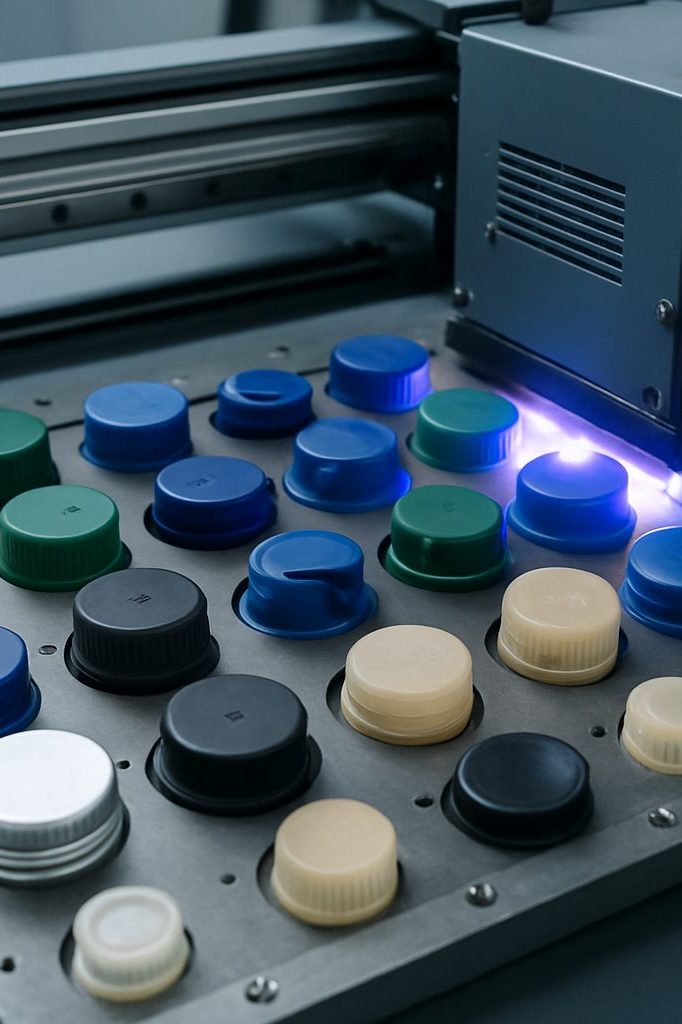
| Trays | Nest modular |
|---|---|
| Formats | Caps / pumps / lids |
| Ink | CMYK + white |
| Cure | LED UV |
| Link | Flat Panel Bench |
Use our contact form for a tailored footprint.
CapPrint Bench is a UV cap and bottle printer built for real SA production, not just showroom talk. If your line bottles by hand or you batch decorate short runs for clients, this is the bench system to consider. It handles closures, caps, and small bottles from 15 mm up to 70 mm diameter. Most Gauteng and Cape Town teams use it side-by-side with bottle and tube print gear, especially where branding changes often or a client wants colourfast logos on both bottles and lids. This bench suits operators and owners who know their way around print fixtures and want Swiss-precise results without sending techs for every jam. It’s not for sites relying only on high-volume, automated filling lines or where labour rules keep tasks strictly separated.
On the South African floor, a bench printer lives or dies by its fit. CapPrint Bench measures 1.2 metres wide and 0.7 metres deep, enough to work two operators side-by-side when you’re pushing out mixed samples, but compact enough for a print room corner. Allow 250 mm clearance at the back for full lid swing and safe wiring. Standard power draw is 230 V, single-phase, 10 amps with surge taken into account, so no rewiring for most sign rooms. Some workshops, especially near Polokwane and parts of Durban, see higher dust or humidity, so plan extra air changes or a draft screen. The machine weighs about 82 kg, which means two adults can shift it between bays by hand on smooth floors if you mind your backs.
CapPrint Bench uses direct-to-object UV print, fixing ink instantly, no oven waits or peel-off risks, even in Highveld dust or Cape Town’s coastal air. Each operator loads a cap or bottle onto a jig, aligns for print, then triggers the pass. Output paces at 60-120 pieces an hour per trained operator, depending on complexity and swap speed. Some teams in Gqeberha and Germiston run two CapPrints side by side: one for lighter inks, one for deep colour jobs using specialty fixtures. Fixtures and jigs swap out in under two minutes with hex key sets. If a label spec changes mid-job or a supplier brings in a slightly larger cap, you can re-jig mid-shift without phoning us for a new setup. What’s most often missed is keeping a spare print head filter in the drawer, it saves half a day when load-shedding cuts a cycle halfway.
Picture a small Gauteng kombucha bottler. They receive mixed lots of 250 ml glass bottles and 38 mm plastic caps, all with tight logo colour rules for farm shops. The owner preps artwork and tests on offcuts. The operator loads five caps at a time into a standard fixture, lines up the first run, and primes the UV lamps. A short test pattern flags a slight misalignment after the first batch, easily adjusted with a thumb screw. Over two hours, sixty bottles and caps get matched finishes, ready for packing. The operator notes that a summer humidity swing slowed ink set by a few seconds, but there’s no rub-off. Once finished, they clear the bench and email us a photo of the finished lot for a fixture tweak next round. Most jobs look like this: test, adjust, run, check, then hand-off.
The fastest way to get the right answer is to show us the limits and realities of your site. List your main constraints, power, space, access, team skills, and any load-shedding workarounds. Snap two or three photos: one wide shot of your bench space, one close-up of bottle and cap types. Jot a basic timing window. If you’ve got a drawing or fixture diagram, attach it, even if it’s a bit messy. This helps us recommend the right fixtures and accessories or flag if a standard fixture won’t fit your range. For more system info or related jobs, browse Use-cases and Projects. When ready, send a message through our contact form. We’ll reply with a step plan for your floor, not a brochure.
Here’s a quick checklist to cover before your mail:
Some teams skip the constraint list and end up with a kit that bottlenecks when orders spike. The most common trap is picking a fixture for only today’s job, not for the odd sizes clients send next quarter. Ink choice is another: the right UV ink will outlast box transit across SA, but the wrong one can fade in Durban sun. Load-shedding and surge spikes are less of a headache if you check your floor’s stabilisers and backup, all our benches run fine on 230 V, but loose plugs or an overloaded trip can still halt a shift. We keep a running log here in Germiston of what’s snagged past builds. If you get stuck, share what held you up, and we’ll work out a fix for the next round. Never hurts to ask twice before a fixture order, swapping late costs more than a careful brief upfront.
Verified Google reviews
Our contact form · Sunnyrock applications lab