Review flat panel UV printing bay specs ready for South African print rooms. Honest numbers, operator tips, and what to check before you email for a quote.
Use Cases · Notes · Contact us.
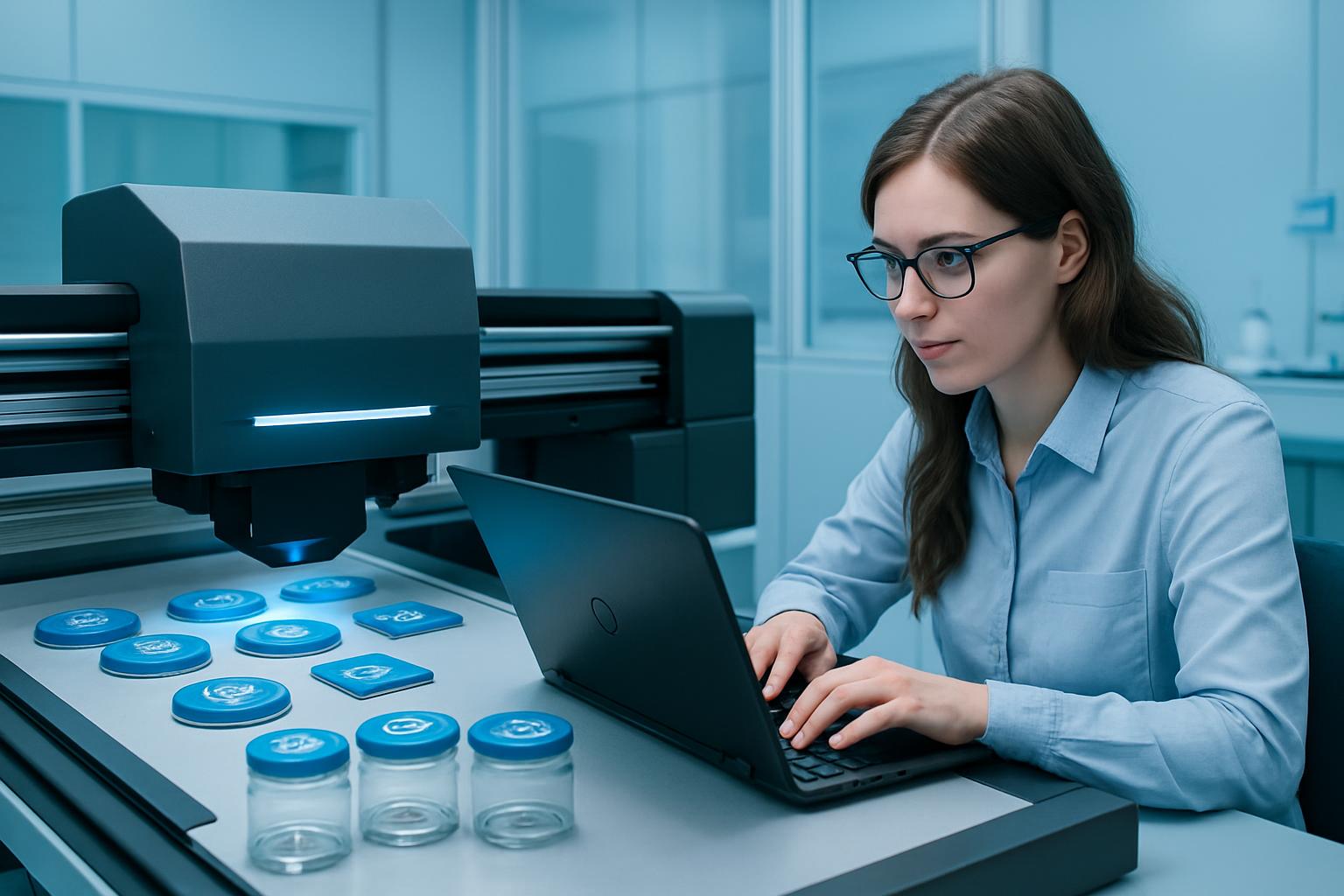
| Bed | A3+ vacuum |
|---|---|
| Ink | CMYK + white + varnish |
| Cure | LED UV |
| Substrates | PP, PET, coated board |
| Use | Closures & secondary |
Use our contact form for a tailored footprint.
The Flat Panel Bench is a UV bottle printing system made for teams needing direct decoration on flattish or rectangular bottles, jars, and containers. It suits Gauteng signrooms, Cape indie beverage lines, and anyone kitting out a bay for custom skincare, promo runs or small-batch launches. Owners handling glass, PET, or aluminium packs needing graphics or barcodes that do not rub off at the depot will get the most long-term value. This bench is best for teams who want Swiss-precise registration without a full conveyor line. If you only run round bottles or need production above 1,000 units per hour, another system from our catalogue will likely fit your floor better.
The Flat Panel Bench is set for South African realities like 230 V mains, three-phase supply and unpredictable voltage from load-shedding. Its steel frame is powder-coated to resist coastal humidity and Highveld dust. Typical working area is 900 mm by 1 200 mm, standing clear for an operator with gloves and a box of blanks. Allow for 1,2 metres clearance on each side if you unpack or repack bottles next to the station. Unit height sits under 1,1 metres, easy to load by hand but high enough to keep bottle labels out of spill zones. The bench handles most bottle sizes between 50 ml and 5 litres, provided the printable face is reasonably flat.
Most weeks, we arrange test runs or try-ons at Kew when the venue plan is still flexible. You bring two or three real bottles and the brief, and our floor operator will go through print samples, ink adhesion, and shelf movement. For example, a Durban operator brought a 100 ml PET serum bottle with a logo that kept scraping off when repacked. After a test run, switching to our low-tac fixture and curing schedule gave her bottles that survived the trip to retailers from Springfield to Ballito. If you are far from Kew, we can send a print sample by courier with finish and ink codes marked.
Decisions on a print system move faster when you send the site constraint, photos, and a rough timing window. We do not need a neat brief - even phone snaps and a sketch are enough to spot traffic flow issues or bottleneck risks. If possible, include a shortlist of use cases (like glass tonic bottle with four colours, or square PET jar with barcode) so we match the bench config. Drawings or packs of messy notes help too. We keep a simple weekly record of what failed last time, so let us know if you have tried another kit and where it tripped up.
South African sites often under-allow for operator space, box movement, and supply access. Skipping a real constraint write-up means crews end up with benches that block a fire route or need rewiring for three-phase. Ink choice is also a common snag. Print rooms switching between glass, PET, and aluminium need to review fixture and finish options (see Flat Panel Bench fixtures & accessories and Finishes) or they risk brief overruns. Most last-minute headaches come from missing a photo or not sending a bottle sample - these add days to the quoting path when skipped.
For full fit details, service options or to see real project outcomes, visit Flat Panel Bench for the main system, Flat Panel Bench service, or browse Use-cases and Projects. For any detail not in the published specs, send a message through our contact form and the team will answer with specific, practical steps for your plant.
Verified Google reviews
Our contact form · Sunnyrock applications lab