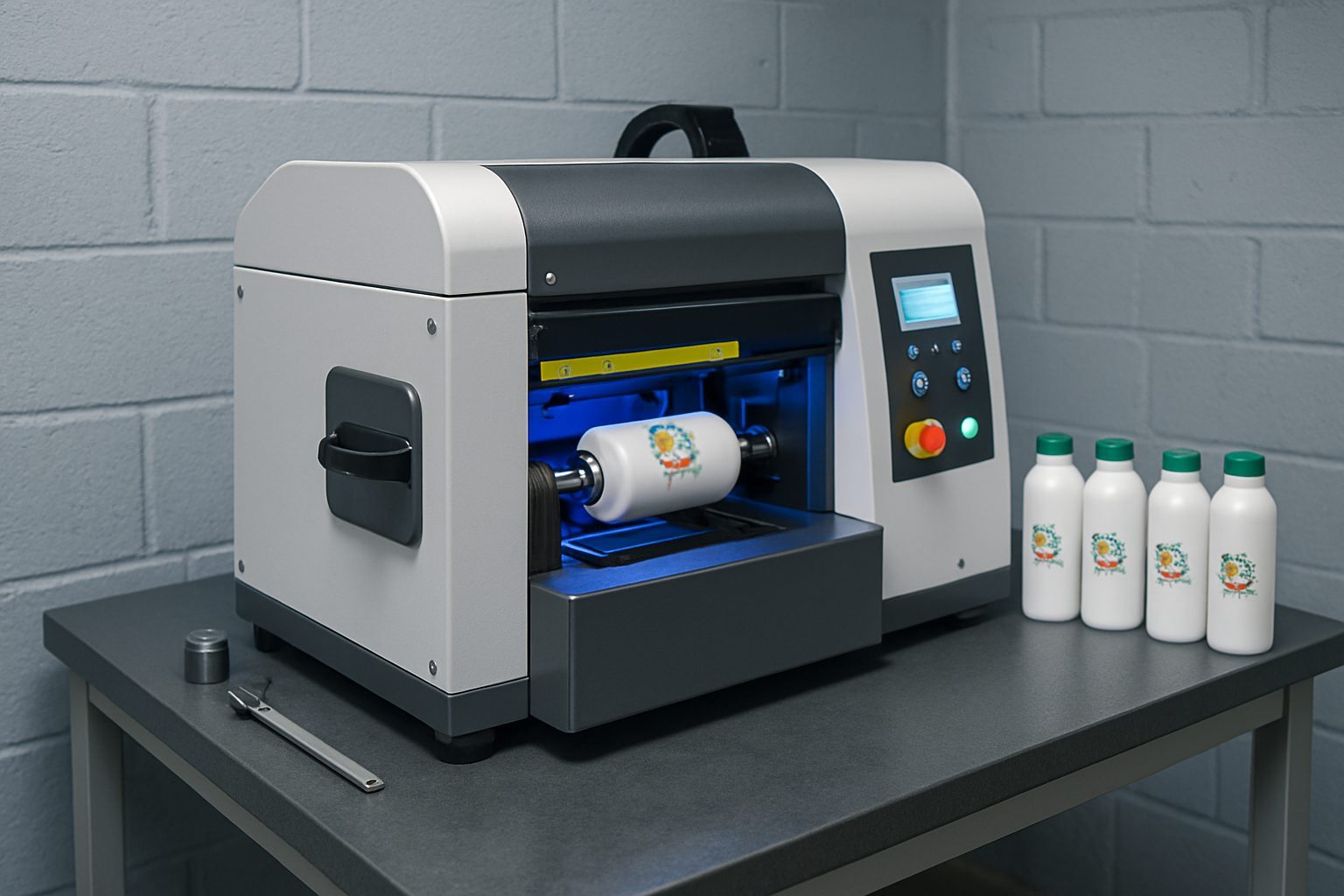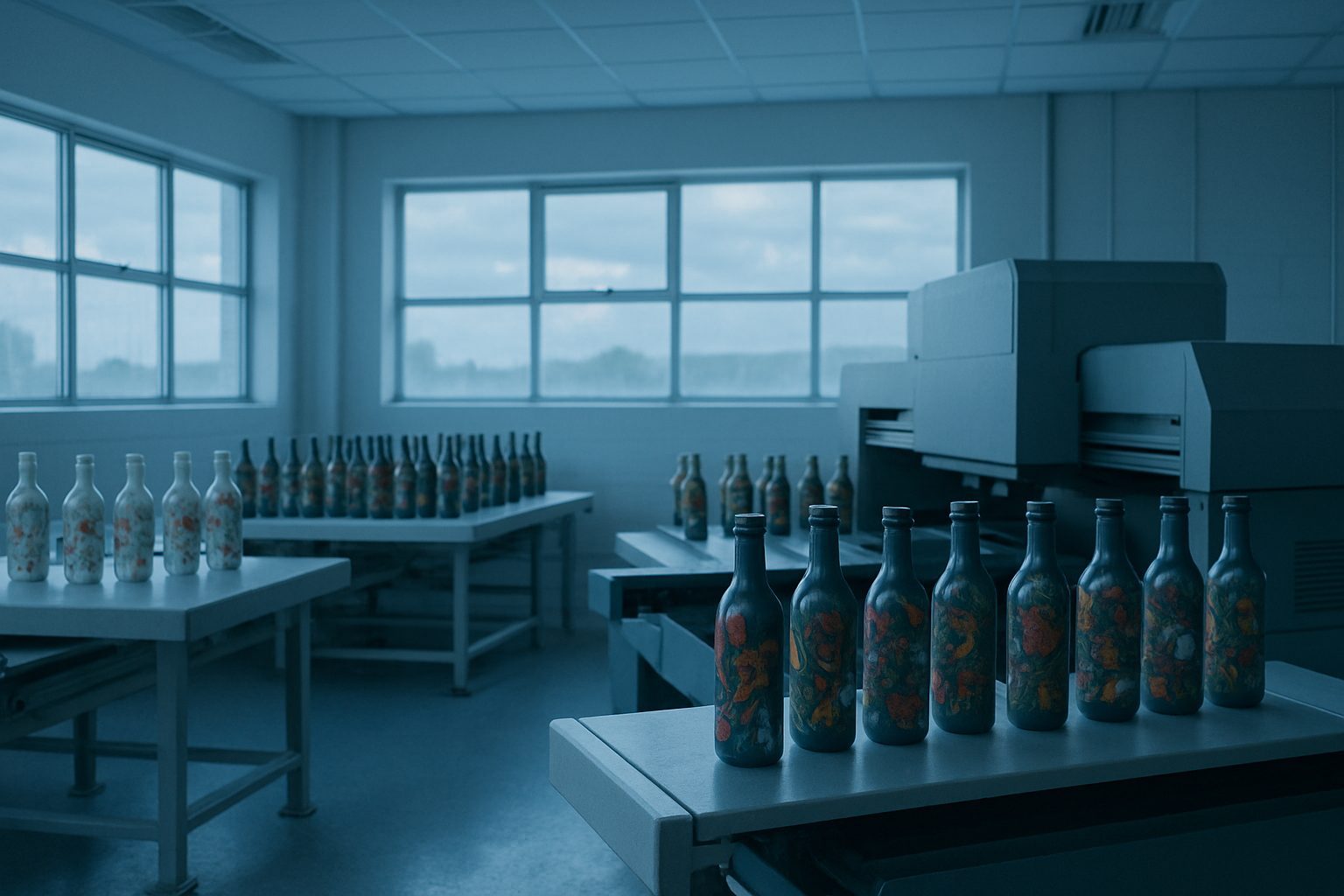
Fixtures, nests and kits made to fit the MiniLine Compact, tailored for South African process flows and floor realities. Straight options for teams that want reliable, clean bottle prints.
Use Cases · Notes · Contact us.
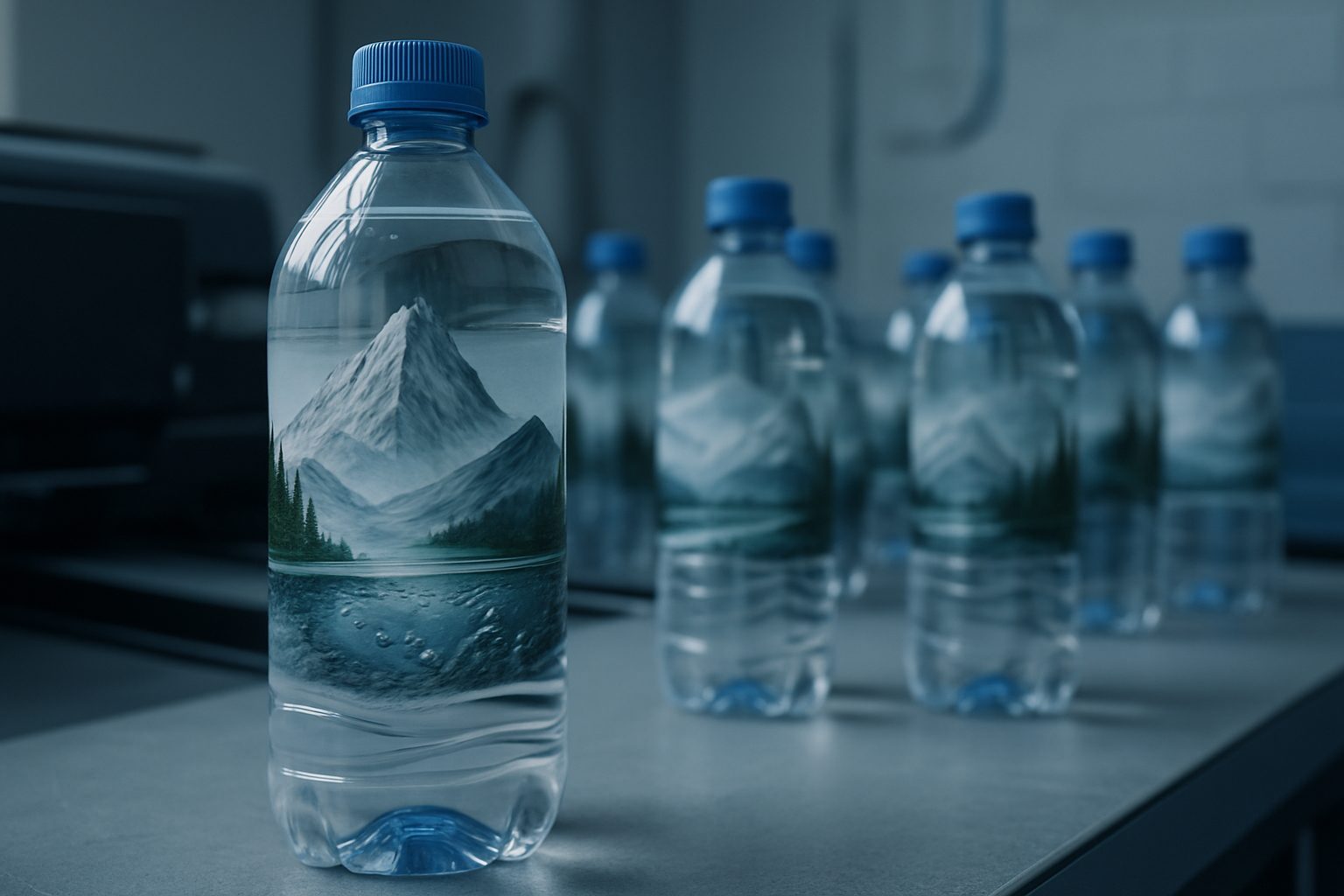
MiniLine Compact fixtures, nests and accessory kits make bottle handling and decoration reliable, repeatable and fast for South African operations. Each piece is made to fit this UV decoration system, so bottles hold steady for a proper print, whether you are running a batch for a local craft gin or a new skincare line. We see these fixtures on floors from Durban to Polokwane, especially in spaces with shifting teams and tight handover windows. If you need to swap bottle types with minimal tools or clean up after a sugary run, these kits are built for it. The fit is honest, not universal, you get options for neck, base or body support, but not one fixture for every bottle shape South Africa can dream up. If your lines use odd shapes, or you cycle from 50 ml minis to 1 litre bombers, give us the context upfront.
MiniLine Compact fixtures suit sign and print rooms, local brand teams, and factory operators who value simple setups and clear maintenance. If your changeovers happen often (less than a morning per run), or your site deals with load-shedding risks, quick-swap fixtures matter. Teams working with import bottles, rare glass or complex finishes might need custom nests, a trade-off in both price and turnaround. If you run one shape, all year, at tight tolerances, consider a dedicated single-use fixture instead. DIY tinkerers or labs with just a few bottles a month may find the system over-specced for their needs.
Fixtures click into the MiniLine Compact’s axis without special alignment tools. Most accessories run fine on 230 V mains, but confirm your bay’s supply, as three-phase comes up for sites scaling to multi-head lines. Operators line up the fixture, drop in the nest and lock the profile, workable even with gloves on, if you’re in the habit of handling sticky glass or working late in a Highveld winter. Swapping from a wide Durban bottle to a tall Gauteng bottle is usually a two-minute reset, assuming your constraint is clear. Highveld dust and coastal humidity are not friends with exposed gears; a quick wipe after sticky runs will keep your accuracy tight.
A print team in Bloemfontein runs 200 half-litre aluminium water bottles for a sports event promo. Fixtures are set up on a Monday for straight-walled bottles with short necks. On Wednesday, a last-minute skincare order arrives, tall, narrow 200 ml glass bottles, different bases and a fussy ink spec. The operator checks the photo from the original brief, grabs the second fixture nest, swaps the insert in four minutes, and is running again. The finish holds, with no slip or wobble, and every print stays crisp through packing and a Friday delivery run to Gqeberha. If the team had skipped sending site photos or missed noting the change in bottle height, the wrong nest could have arrived, costing hours and a quick workaround.
The best briefs land with a clear constraint, current site photos, and a practical window for setup, especially if your process or bottle spec changes between runs. If you are not sure which fixture fits your bottle, matching your spec to our MiniLine Compact specifications page gives context for a faster answer. For the fastest help, email two photos (bottle and line), your city, and your target week through our contact form. If you have a statement pack or drawings, attach them too, even if the set is not polished.
Most problems start with missing site details or unclear constraints. Without photos, the wrong fixture might be packed, eating up delivery time and costing you an unplanned rush fee. Forgetting to record which nest worked last round leads to repeat mistakes, especially when temp teams rotate between shifts. Load-shedding windows can bump your schedule, so list your hours up front. If you are unsure between two fixture options, choose the one your crew can use without needing a specialist, extra features rarely beat local know-how. After each project, we keep a dated note on what worked and what slipped. That ongoing record helps us give honest advice, not just sell the next kit. For questions on site fit or fixture details, check our resources or send a message through our contact form.
Verified Google reviews
Our contact form · Sunnyrock applications lab