Here we set out the key specs, site needs and practical checks for the MiniLine Compact bottle printer. Use it to match your brief to the right bottle-decorating system before contacting us.
Use Cases · Notes · Contact us.
| Length | < 6 m |
|---|---|
| Changeover | Same-day |
| Staff | 2,3 |
| Power | 3-phase SA |
| Output | Short-run / sample |
Use our contact form for a tailored footprint.
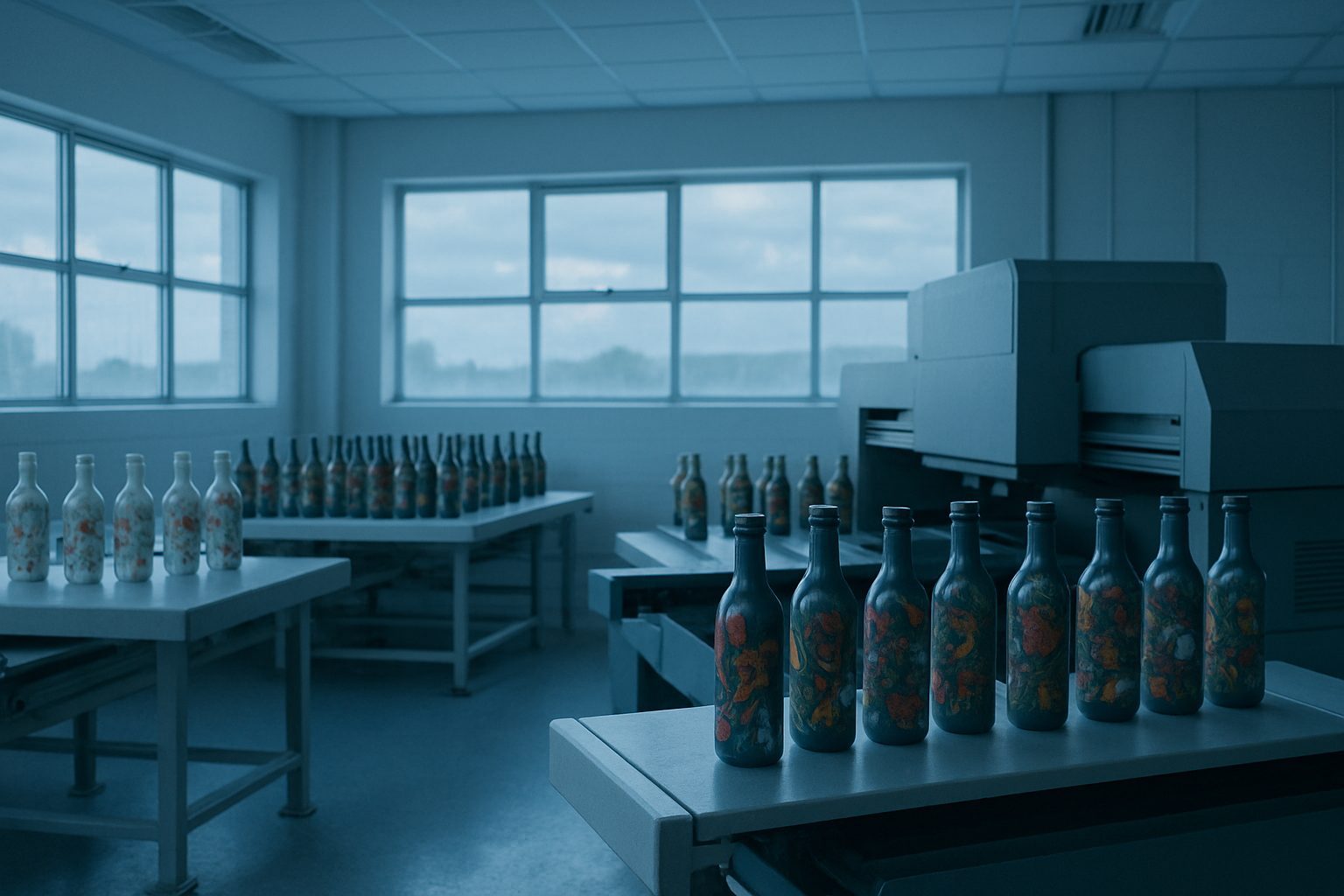
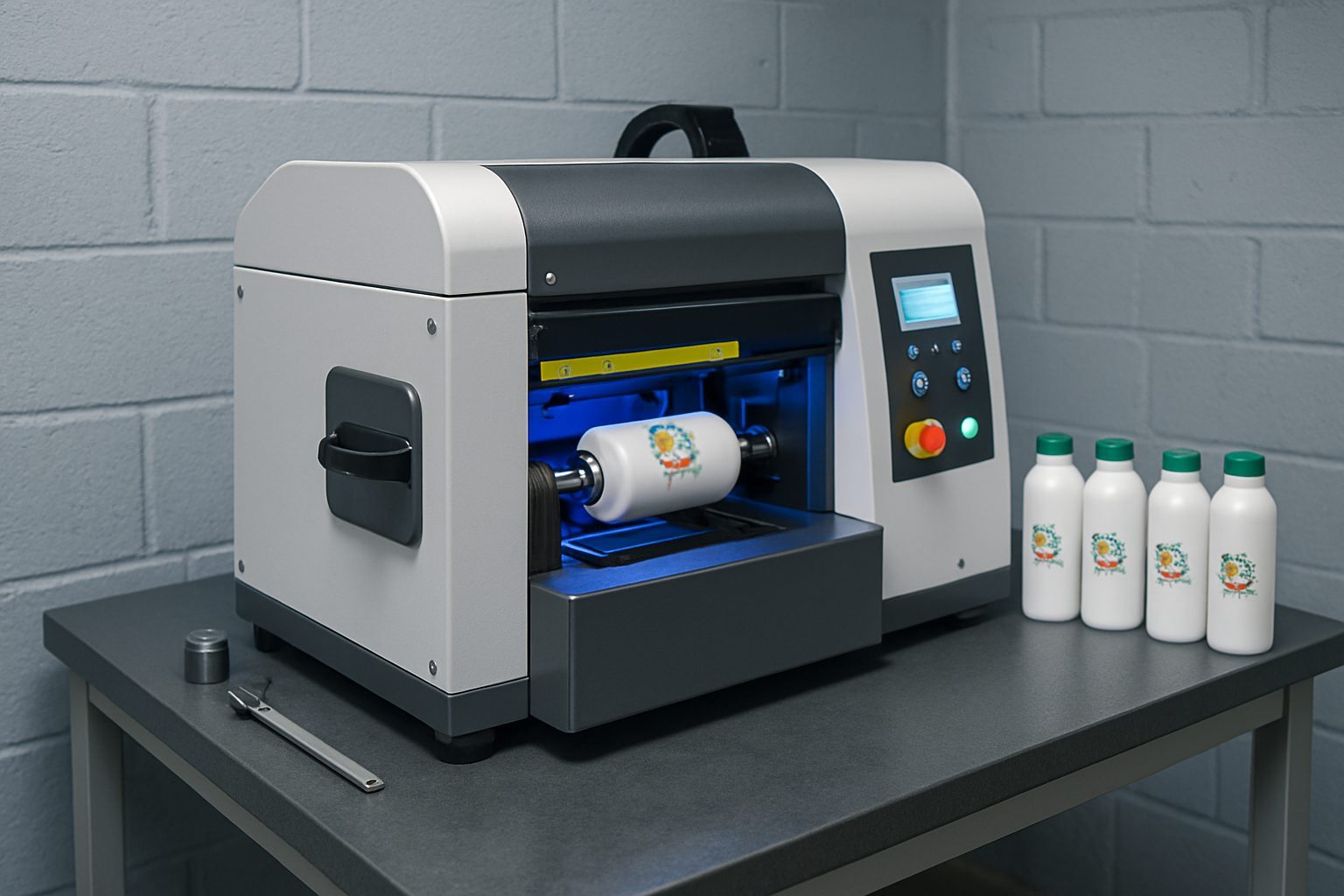
The MiniLine Compact is a precision-engineered UV bottle printer sized for on-site use in South African workshops, sign rooms, and smaller plants. It is designed to print directly onto glass, plastic, or aluminium bottles from 50 ml up to 2 litres. Typical users include craft brewers, kombucha bottlers, boutique skincare brands, and promo lines that want decorated bottles tough enough to survive packing in George, shelf handling in Cape Town, or cross-town shuttles in Durban. If you are running small to medium batches and want print that will not rub off or smudge after a run through Highveld dust or coastal humidity, this system fits the slot.
The MiniLine Compact suits teams with regular short runs, seasonal lines, or frequent design changes. It is not for the operator running bulk commodity filling lines or mass bottling at high speed. Power is single or three-phase, and a stable 230 V supply is required. You do not need a climate-controlled room, but dust and fumes must be managed. If you have limited floor space, this footprint fits where bigger systems cannot go, on a mezzanine, in a container, or between pallets. Larger beverage factories or operations targeting national retail chains may need to look at alternative models with wider print beds or auto-feed conveyors.
The unit runs on local power (230 V, 50 Hz), and can be bolted down or left portable as your workflow needs. Print heads handle batches from one-off samples up to a few thousand bottles per week. A typical run involves manual loading onto jigs or rotary fixtures, quick software selection from the operator’s own laptop, and curing with built-in UV LED modules. Turnaround is not slowed by label stock shortages or municipal delays with consumable supply. If you are working under load-shedding, the compact format makes it realistic to run on a small inverter or backup generator. You will find a detailed list of fixtures and accessories linked with this model.
A Gqeberha kombucha business wanted their 330 ml PET bottles to stand out at the food market but kept losing paper labels to condensation and cooler box water. They measured their available print room at 3 m x 2 m, confirmed a 230 V backup line, and sent us photos of their workbench and actual bottles. We mapped the constraint (low headroom and tight turnaround) and picked a MiniLine Compact with basic rotary jigs. Their first test prints handled wet hands and market repacking without smudging. Since then, they change artwork every few weeks without extra outside help, and its paid for itself by skipping label re-orders.
Preparation smooths the quote process and prevents surprises later. Please gather the following before you reach out so we can get straight to real options. If you are missing a drawing set, do not worry, clear photos and your timing window are usually enough to start. When you email, include your city, target bottle, and any tough site facts (for example, three-phase only in one bay, no roof insulation, or limited receiving hours).
The most common issues come from picking a finish or fixture before writing out your main constraint. For example, chasing a textured metallic effect when humidity is a daily issue, or choosing oversized fixtures without considering store-room doors. Teams sometimes forget that operator skills matter, systems run best with someone who can swap out jigs or troubleshoot a USB cable, not just pack bottles. A few skip checking power and end up with tripping breakers during print runs. Always match your site’s real limits to the spec list, not just the flashiest capability. You can check related use cases or browse the full catalogue if you find your constraint shifting.
Verified Google reviews
Our contact form · Sunnyrock applications lab