Fixtures, nests, and kits tailored for the RingGrip Fixture. Get the right fit for your South African print or packing process, without surprises.
Use Cases · Notes · Contact us.
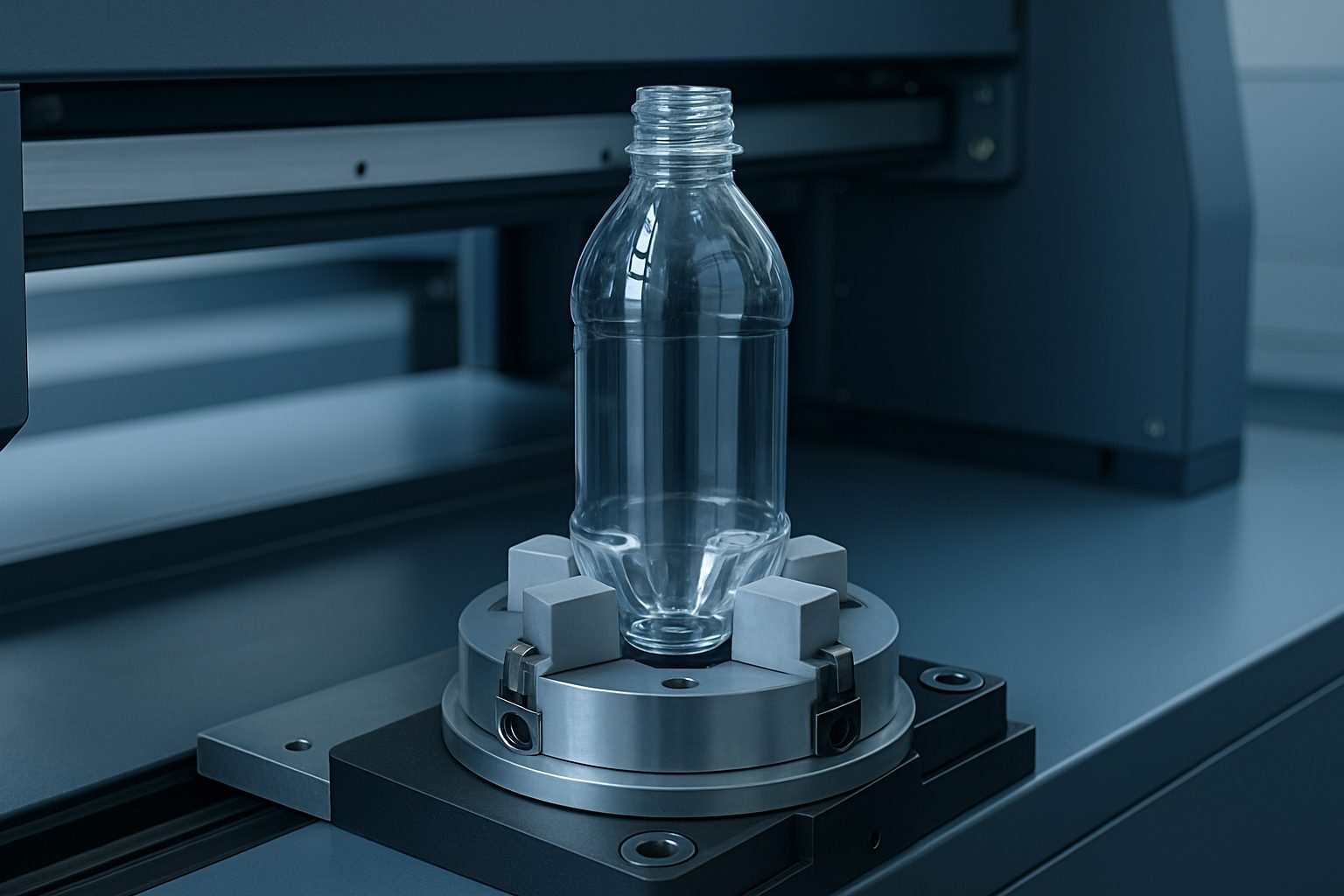
RingGrip Fixture extras include universal nests, bottle cradles, multi-size clamps, and changeover kits that match the RingGrip Fixture’s Swiss-precise throat, no guesswork needed. These accessories are built for practical swaps on Gauteng workshop benches, Cape Town’s coastal lines, and the Highveld’s mixed-batch rooms. If your site handles frequent bottle shape changes, odd-litre runs, or needs higher throughput, these add-ons can save hours when the next batch lands early or the packing team changes bottles mid-week. For workflows with just one glass or PET size, you might not need more than the core fixture. If your runs bounce between formats or you deal with both craft beverage and promo lines, a nest or change kit usually pays for itself in setup time.
Workshops, print rooms, and bottlers who must switch between different bottle shapes, neck sizes, or closure types get the clearest value. Swopping out a nest or adding a conversion kit keeps the operator focused on the job, not on jury-rigging jigs mid-shift. If your operation is locked to a single product or the team only processes one PET bottle size all year, extra accessories can gather dust. But if your orders hop between Polokwane spirit bottles and Bloemfontein health shots, having the right fit ready means fewer missed deadlines and less late-night scrambling during load-shedding.
If you are unsure, see the RingGrip Fixture specifications or chat to us about your bottle mix. The finish options and fixture choices change slightly depending on typical South African transport conditions, highway bumps from Isando to Pietermaritzburg may mean a different choice compared to Durban port runs.
Our fixtures fit print, sign, and bottling floors from Gqeberha to Germiston, where both 230 V and three-phase supply are common and municipal red tape eats time. The nests and kits are engineered to survive typical factory dust, humidity, and the wear of daily changeovers. A Cape Town skincare packer might run 200 ml glass in the morning and 500 ml PET in the afternoon, one clamp swap and the RingGrip is ready. No outside specialist needed. Local teams tell us it’s faster to swap a RingGrip nest than to clear the table for a second unit. Most kits are sized for SA glass and PET necks up to 45 mm.
A Durban promo line switches from aluminium spirit bottles to square 250 ml PET for a winter campaign. The foreman takes two quick photos, lists the bottle diameters, and notes the operator’s preferred hand. They send a message through our contact form with the city, a timing window, and a note on site power. Our team reviews the info, checks past jobs, and replies with a shortlist of nests and clamp options (and any finish constraints if Gauteng dust matters). The crew picks the simplest option that matches stock levels and can be fitted without special tools. This back-and-forth usually finishes in two emails, since we already know from other coastal jobs which options last longer in humidity.
Clear info makes a difference. Bottler teams who send a straight city name, two bottle photos, and a basic timing window get kit options that fit the first time, not the third. Add a drawing set or statement pack only if it’s ready, scrap paper is fine, so long as neck and base diameters are labelled. Tell us if you expect odd-shaped bottles, regular re-tooling, or if there’s no three-phase on site. This helps us skip guesswork, especially if you’re in a smaller centre where new parts can take a few days.
Teams sometimes over-spec by ordering every extra kit, assuming ‘one day we might need it’. Unused nests gather dust and eat shelf space. Others under-spec, hoping to save on the first order, and pay later with rush fees or delayed jobs. The trick is to match your order to your site’s real mix and how fast bottles change, rather than what sounds good in a catalogue. We keep a short internal note after every job on fixes for missed picks, so you get a straight answer based on what worked (or failed) last month, not just what’s in stock today. For more shop-floor notes or to explore other use-cases, see the links below.
Verified Google reviews
Our contact form · Sunnyrock applications lab