Note

Amber glass and UV ink

Amber glass decorated with UV ink is a staple for South African CBD and wellness lines. Here’s how we approach briefs, avoid surprises, and deliver decoration that lasts.

Keep exploring

Use Cases · Systems · Contact us.

Amber hides and reveals

White underbase still matters for brand colour.

GlassGuard Soft

Amber scuffs show under shelf lights.

Wellness calendars

Sample days keep launches on track.

Why amber glass with UV ink keeps surfacing

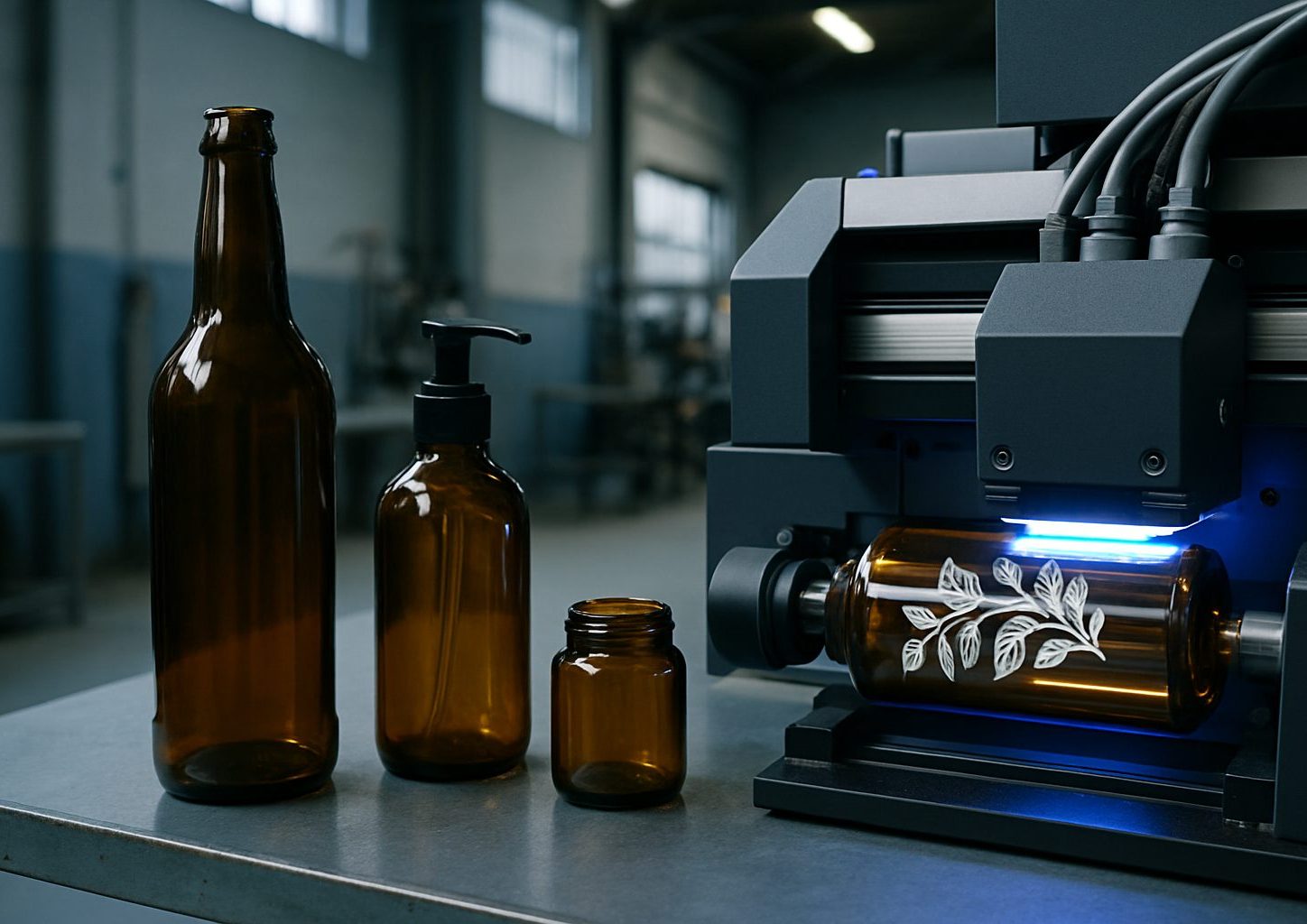
Amber glass has long been the default for CBD oils, botanical tinctures and cosmetic serums across Gauteng, Durban and the Winelands. It protects formulas from UV light, manages shelf-life, and carries a premium look. Yet, its dark colour and slippery surface challenge most conventional bottle print methods. UV ink, paired with a solid white underbase, is one of the few ways to get a crisp, frosted design or key label data that won’t rub off in transit, on a store shelf or in a Cape humidity cycle.

Teams in Paarl and Rustenburg often want a clear sequence to brief their contractor or crew, not a generic promise. The combination of amber glass and UV ink lets even small labs or promo lines avoid paper labels and fast-fading screen prints. But, success always starts with a practical, site-specific plan agreed before the first bottle hits the line.
Who this suits, and who it does not

Our amber glass and UV ink approach works best for CBD, wellness, and craft beverage brands aiming for a permanent, premium mark that survives handling. It also fits skincare ranges that use dark glass to limit ingredient breakdown. If your workshop deals with short runs, changing artwork or seasonal batches, UV ink will usually suit you better than pad print or hot-stamp, especially where the exact Pantone shade and sharp lines matter.

Operators expecting old-school print-and-fire lines, or those needing full-wrap metallics on highly angled surfaces, may not see a fit here. We flag this early for fragrance or candle lines with textured glass or thermal decals in mind. Our kit runs straight on 230 V mains and can be dialled to three-phase in most industrial parks, but tiny home studios might struggle for clean space and safe bottle prep.

How the process runs on South African floors

Every job starts with an honest one-page brief, a habit that saves on back-and-forth and last-minute surcharges. We first pin down the main constraint. Is it access to power during load-shedding, a rush to fill before month-end, or a tricky handover at the warehouse? Without clarity here, timing and results drift. We recommend locking in these details before picking colours or effects.

Our sequence: confirm the brief, map the floor process, check sign-off roles, then draft a short close-out note so both day and night shifts know what was done. This stops the midweek surprises and lets even new crew get up to speed. We answer most queries from our Jet Park sample bay and keep post-job notes, so next builds go quicker.

A typical project: CBD oil line in Paarl

A CBD startup in Paarl wanted 50 ml amber bottles with a clean, white-ink info band plus a green logo. Their bottling bench faced regular load-shedding and quick staff changeovers. We requested two photos of their capping area and a note on their next fill date. After reviewing their sketchy print file and checking their three-phase plug, we set up a UV underbase sample using our standard system. The client’s operator managed the line handover using our close-out template, and their bottles survived three weeks of Gauteng transit without a mark rubbed off.

This case shows that clear site notes, even if basic, allow for smooth setup. When the on-site owner sends proper timing and stray photos, we can match the right ink and fixture without a return visit. If you’re preparing your own brief, browse our how to brief a Sample Lab Day or use-cases for more worked examples.

What to prepare before you email

The most efficient projects start with the team sending a one-page brief, two site photos and a clear window for access. If possible, add any drawing set or your artwork pack, scrappy is fine, as long as it is current. Let us know who owns the site on the day and if there are any municipal or space access quirks (like tight courtyards or late arrivals).

We record what failed last time on similar jobs. That could be a missed power test, a late sign-off or a missing fixture. If you note your constraint up front, we save that cost before it happens.

Pitfalls and missed steps

Teams that skip the constraint step usually end up paying for urgent production, repeat visits or mismatched finishes. Rushing the ink spec because a sample looked fine in an airconned boardroom ignores real-world scuff, dust and repeated shelf handling. We see most trouble on jobs where timing is assumed, site power is fuzzy, or the on-site contact is swapped last minute.

If you need a walkthrough or reference, send a message through our contact form and state that you’re working on amber glass with UV ink. You can also browse related notes or finishes for solutions tailored to South African production.

Talk to BottlePrinter Lab

Our contact form · Sunnyrock applications lab