Note

UV on PET, what craft beverage teams miss

Most UV prints on clear PET fail because the cure window is skipped or not logged. Here’s what South African craft beverage teams mix up and how to avoid expensive repeat jobs.

Keep exploring

Use Cases · Systems · Contact us.
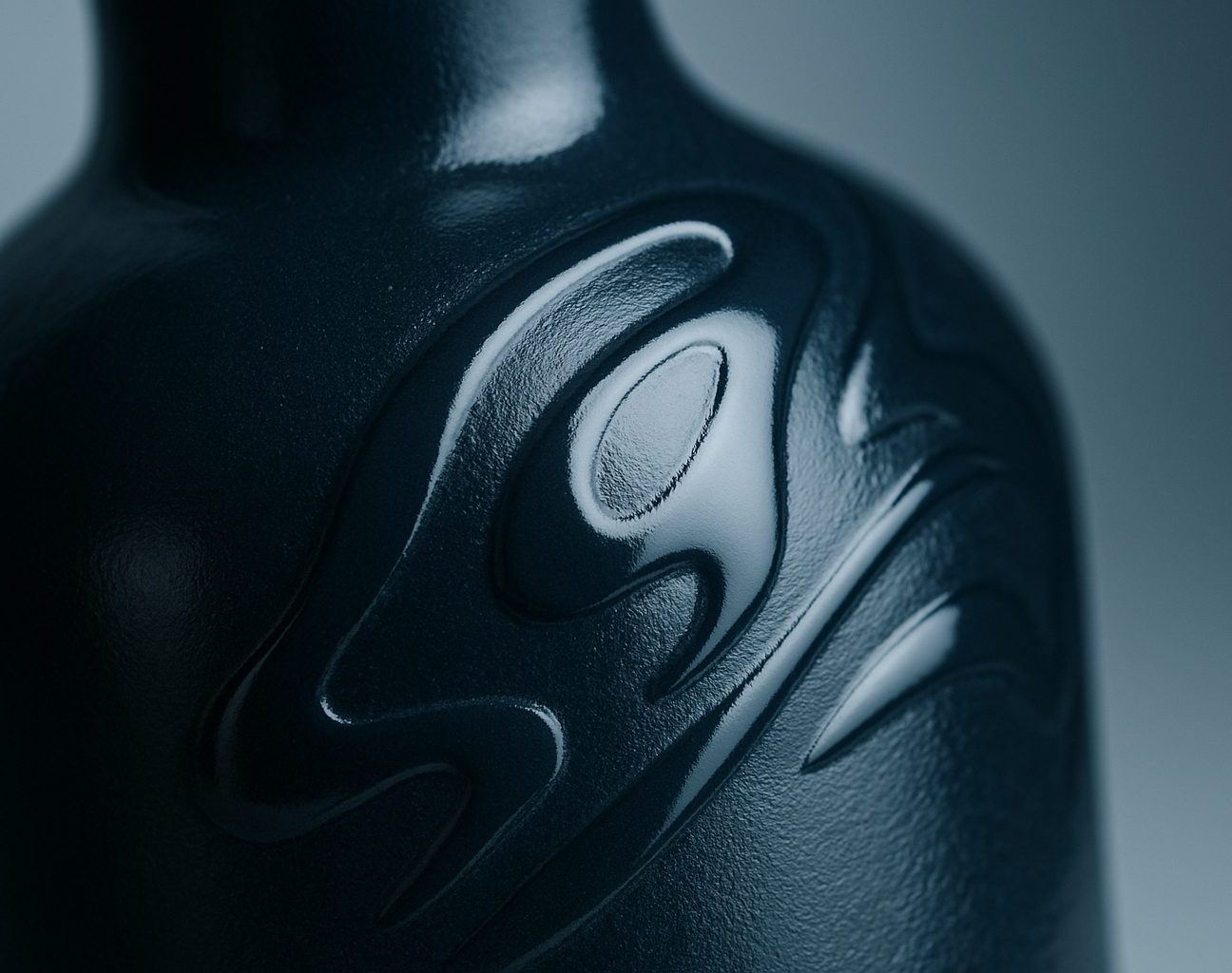
Start with the bottle, not the art

Clear PET shows every underbase and cure miss.

Log the cure window

CureCheck coupons beat guesswork on night shift.

Fixture before colour

RingGrip Soft jaws keep shoulders clean.
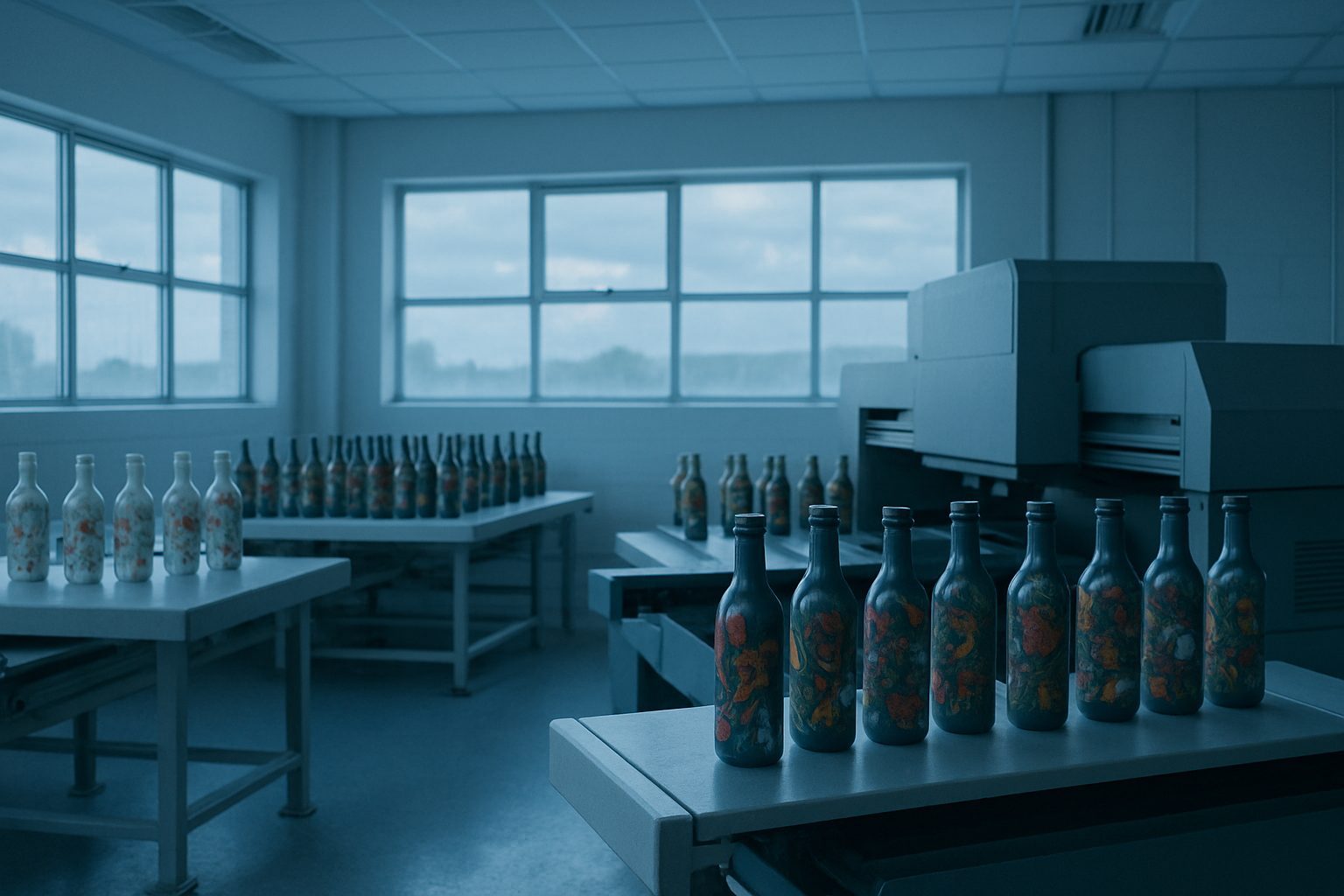
Why PET jobs for craft lines keep failing

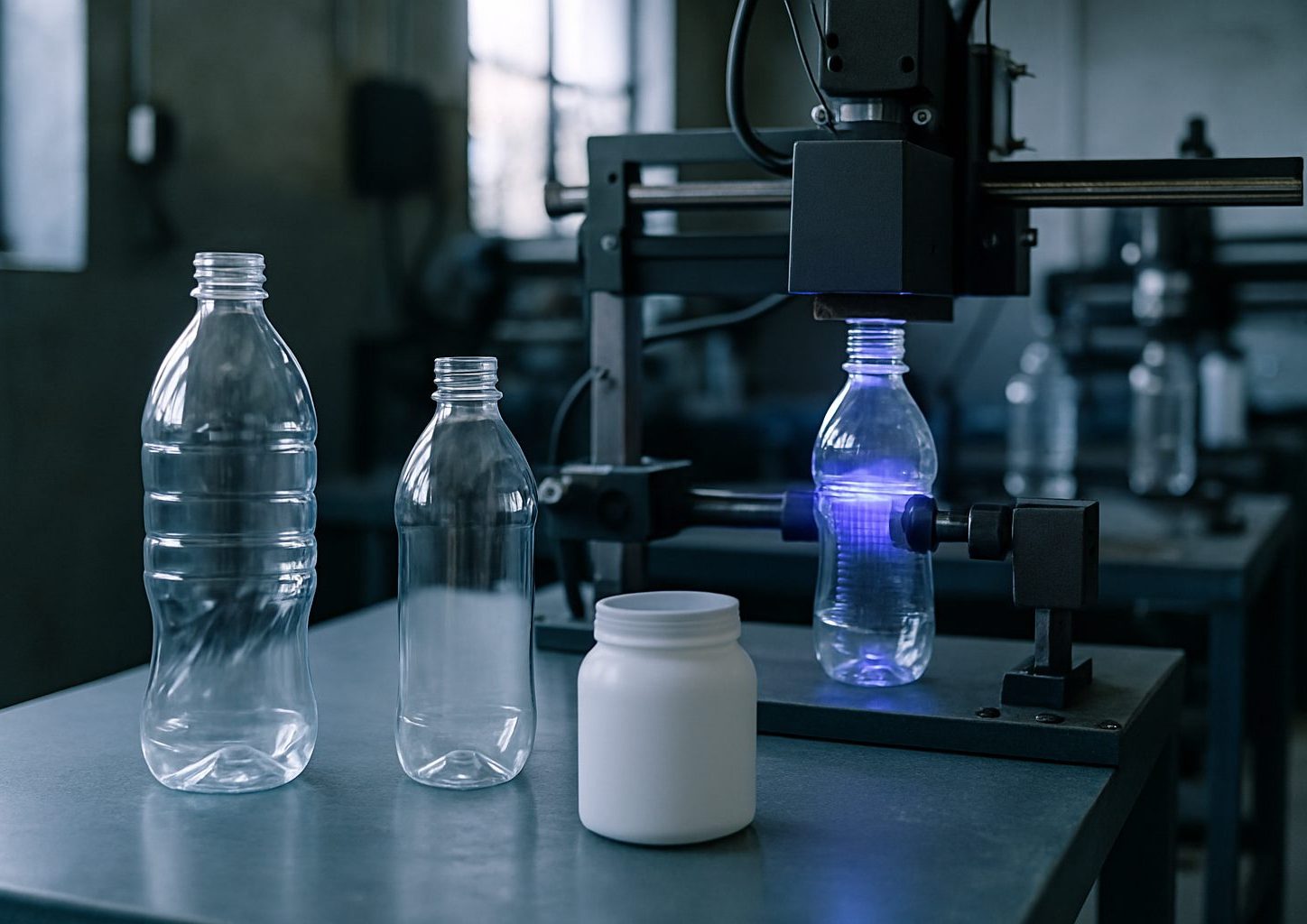
Clear PET bottles are popular for craft gin, kombucha, and flavoured waters from Paarl to Durban. Many teams expect UV decoration to stick, then get calls about artwork rubbing off after bottling, shipping, or a wet shelf shift. The usual miss is skipping the cure window or failing to control it on the floor. Without a logged cure, even the best ink will not anchor on PET. The issue is not the PET itself, but the lack of a defined, workable sequence that will hold up to handling from the filling line, through transit, and onto the retail shelf.

We see the same story when teams call in frustration: a new bottle, a tight artwork deadline, and a process no one can hand over cleanly to the night shift. The risk is highest if you brief a contract decorator or rotate shopfloor crews. Getting this right means your brand print still looks sharp by the time the box reaches a city like Gqeberha or a lodge fridge in Limpopo.

Who should use UV on PET and who should not

UV decoration on PET suits craft teams with limited minimum order sizes who need their brand to look factory-finished from the first batch. If your range is small, you want the same print on all bottles, and you need decoration that survives both Gauteng’s Highveld dust and coastal humidity, PET with UV is practical, provided you control the cure.

It does not suit teams who want to cover every square centimetre, especially where statutory or recycling panels must be left clear. If your fixture cannot keep bottles still or your in-house team cannot keep a process log, you are better off with sleeves or adhesive labels. Inks will not forgive a missed step.

How we approach UV cure windows with craft beverage clients

Our team works from jobs already run across industrial parks and craft production spaces, not from theory. For every PET print request, we start with the real site constraints: access for the system, timing before and after filling, your available mains or three-phase power, and who signs off the process. We pause if any of these are fuzzy. If your production runs during load-shedding, or shifts swap mid-task, we need to know.

A cure window is not just a timer setting. It is a logged process step: for each run, one person takes responsibility for confirming the dwell times and lamp intensity, and that is written down. We advise teams to leave a short close-out note for the next shift, usually just the times, the bottle batch, and one line about temperature or humidity if that caused a problem. These basics prevent most expensive reworks.

Worked example: Durban kombucha crew

A Durban kombucha company emailed after three failed runs. The first contractor skipped proper UV cure, and finished bottles looked good but shed print after a week in the chiller. We reviewed their process: neither the cure time nor lamp settings were written down, and no one could confirm the batch temperature. We helped them write a one-page brief, defined where not to print (for recycling marks), and set up a simple sign-off note for every print run. Their on-site operator texts us a photo and the timings most weeks.

After two runs, their bottle art matched the quality South African retailers expect and survived the trip from Durban to Bloemfontein. They now brief contractors using our adhesion tests to run before a bottle launch template and keep a running cure log.

What to prepare before emailing us

Emailing with the right prep makes your first round faster. For PET jobs, our sample bay team starts with a tight outline, never just a loose request for 'better adhesion'. Two clear bottle photos and a timing window are enough to get us on the same page. If you have a drawing pack or a brief for the bottle decoration, send it, even if it is messy. If you need to keep specific panels clear for statutory or recycling reasons, mark these and mention them early. For complex sites, a power source photo and a note on shift handover help.

Pitfalls and avoidable mistakes

The two most common failures: skipping the cure window, and not writing down what was done. Both lead to repeat jobs, missed launches, and wasted Rand, especially when Cape Town or Polokwane distribution is part of the plan. Do not assume contractors will follow unwritten instructions. Cure times can drift if load-shedding hits mid-process or if lamps age faster than expected in a humid bay.

Finally, do not wait for artwork approval before locking down your site constraints. Inks and fixtures cannot compensate for unclear process steps. If you need a walkthrough or want to see how a logged cure works, email our team at our contact form and mention UV on PET. You can also read related notes on logged cure for small formats or browse our use-cases for more examples.

Talk to BottlePrinter Lab

Our contact form · Sunnyrock applications lab