Support
Get your team up and running with MiniLine Compact after install. Here we cover what to expect, how to prepare, and what pitfalls South African teams often face.
Use our contact form with your system serial.
See also resources and shipping & samples.
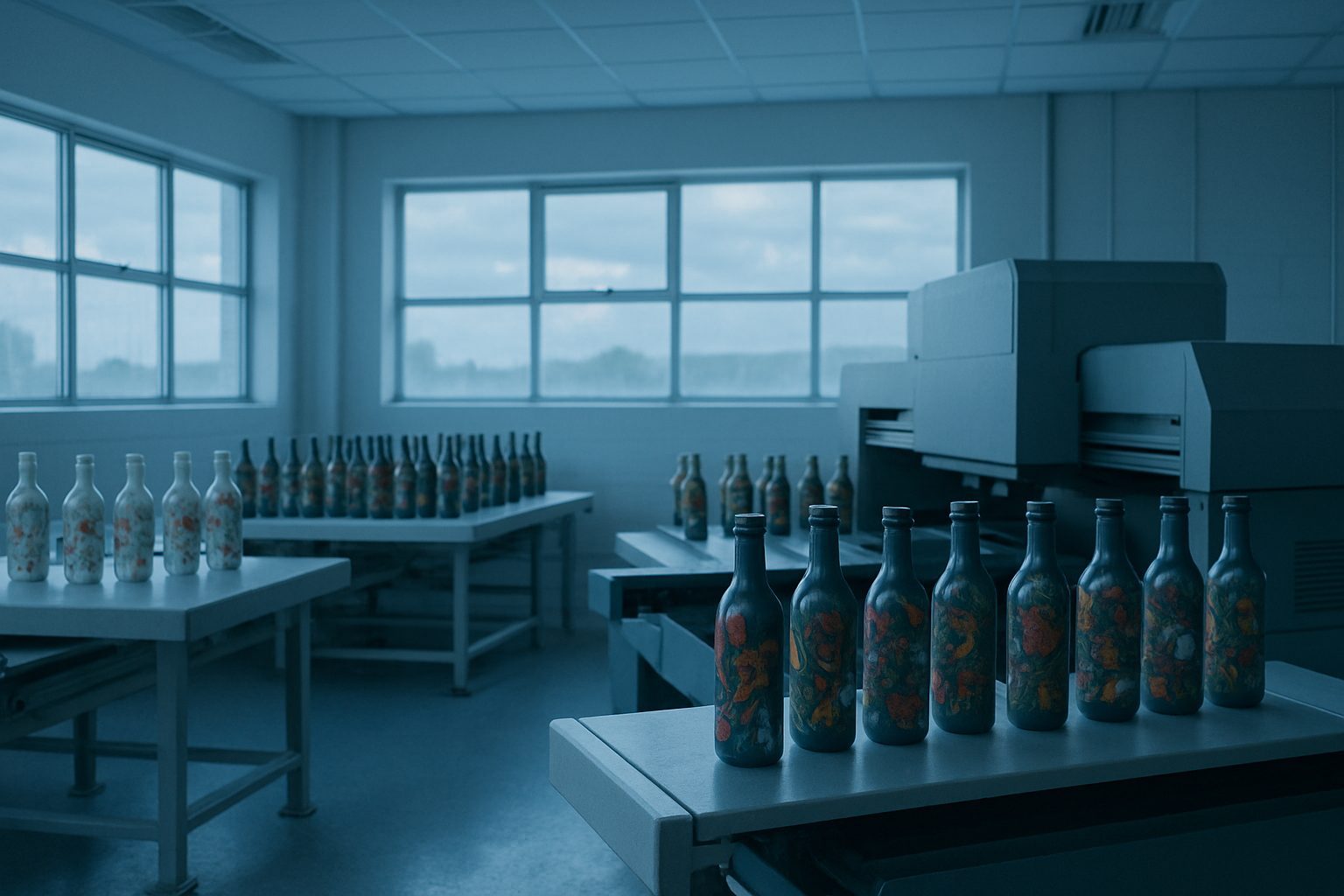
MiniLine training is a practical programme run after your MiniLine Compact system is installed in your space. We focus on safe setup, loading bottles, prepping artwork, fixture use, ink handling, maintenance, and troubleshooting in daily South African conditions. Operators work directly on your floor, with your bottles, so questions and adjustments happen in real time, whether you're under Highveld dust, coastal humidity, or inside a busy Gauteng industrial park. Training is suitable for print-room staff, bench operators, or business owners who want to handle day-to-day bottle decoration and get production running smoothly. Each module is based on the real tasks you'll face, not just theory.
This training suits small to mid-sized teams who want to run a MiniLine Compact for branding, sampling, or short production runs on glass and plastic bottles. It works well for craft producers, skincare start-ups, event and promo lines, or anyone who needs UV decoration to survive packing, transit and shelf handling. If you’re a high-volume bottling plant with automated lines or you only need single-logo batches a few times a year, this may not be the right fit. Teams needing full automation, turnkey inks for every substrate, or those not ready to manage daily maintenance are better served by larger-scale systems. We’ll answer these fit questions up front, so you don’t waste time or money.
We train your team on your bottles, in your environment, with your electricity, fixtures, and handling routines. Load-shedding, uneven power, and dust control come up because they matter here. We show you how to adjust curing for humidity changes and keep ink from sticking to the wrong places. Operators learn to check for proper adhesion after each run, spot early signs of lamp or pad trouble, and keep the system running between jobs. We point out what corners not to cut, and which ones actually do save time safely. The goal is to get you from installation to confident first production, no imported theory, all local reality.
For extra support between sessions or after the first week, you can use our remote recipe help or fixture care resources. They’re written and filmed on real South African floors.
A new skincare brand books MiniLine Compact training for their small production room in Durban. Before the first run, the operator emails the system serial through our contact form. The trainer arrives, checks three-phase supply and earthing, then guides setup. Bottles roll onto the machine, artwork files are loaded, and the operator learns to align fixtures and adjust ink settings for high coastal humidity. The operator runs test prints, checks for rub-off, and cleans pads before shift end. By lunch, the floor is already discussing how to split the batch for filling and packing. Within a day, the team works independently, only emailing for special ink or pad questions.
Before you request training or log a question, preparing the right information helps the process run faster. Accurate details about your setup mean we can answer without back-and-forth. Start with the basics below, and keep this list on your bay wall for future reference.
Most training hiccups are avoidable with extra attention to a few details. Skipping power checks during load-shedding will give you curing problems every time. Incomplete artwork or wrong file types slow down the whole session. Many teams forget to clean fixtures and pads when Highveld dust picks up, leading to poor adhesion. Not showing operators how to reset ink levels after each batch leads to clogged heads within the first month.
Always check your spares and pads stock before a booked session. When in doubt, send a message through our contact form with your checklist. No question is too basic, early emails prevent late production headaches.
Verified Google reviews
Our contact form · Sunnyrock applications lab