Note

Clear PET that stays clear

Here we explain how to keep clear PET bottles crystal after UV decoration. Avoid haze and rub-off with the right fixtures and process for your team’s floor conditions.

Keep exploring

Use Cases · Systems · Contact us.
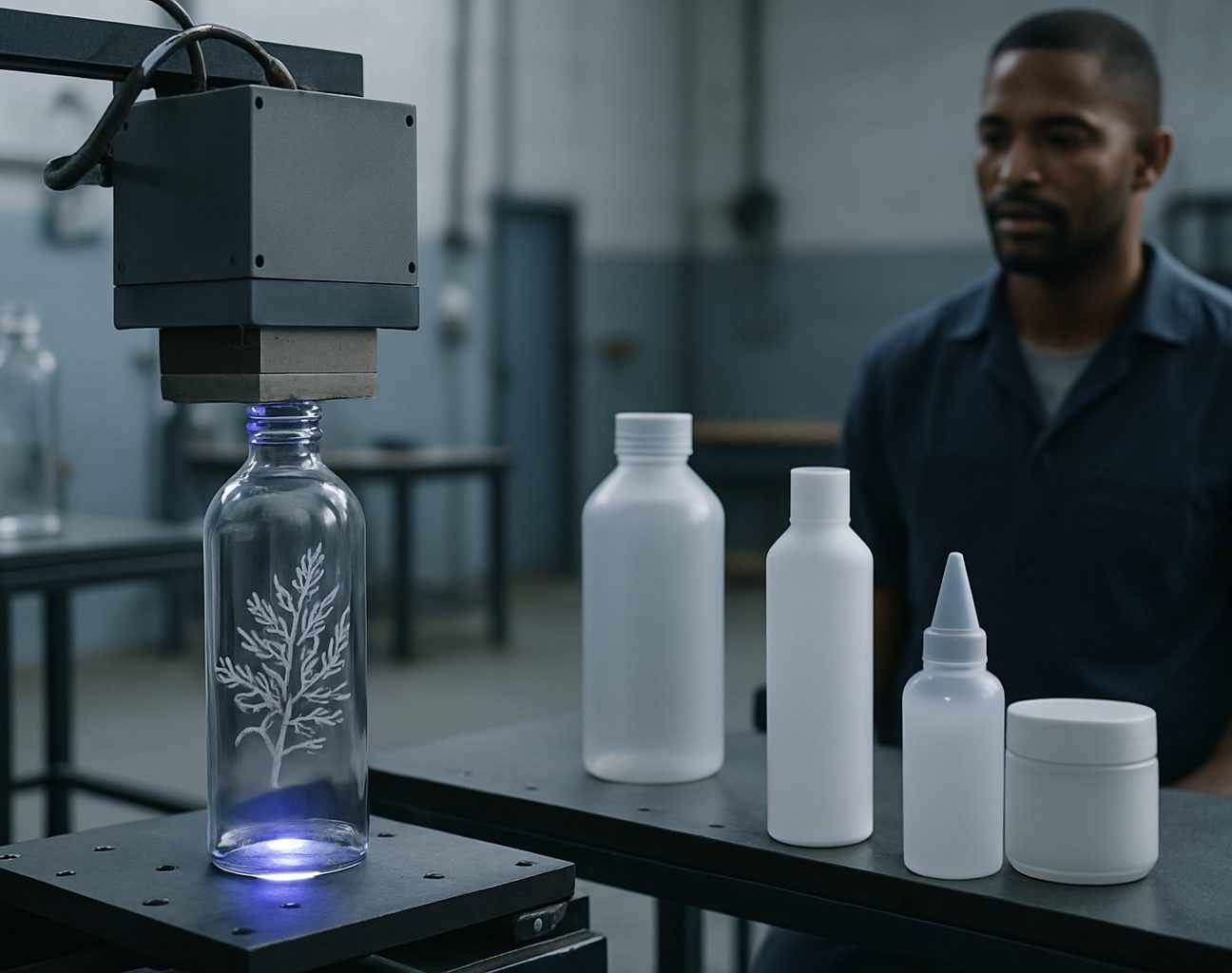
Crystal shows everything

Fixture marks and haze kill the pour look.

Clear-safe jaws

PETClear Soft contact only.

Optional white

InkFlow white when art needs opacity.
Who needs PET that stays clear, and who does not

Clear PET bottles make products stand out, especially where shelf clarity matters for spirits, infused waters, and some skincare lines. If your label or direct print needs to preserve ‘see-through’ brilliance without clouding, yellowing or scuffing during transport and shelf life, this note is for you. We see most requests from teams in Pietermaritzburg, Bloemfontein and Cape Town who need consistent clarity from first pallet to the last bottle. If your decor will be fully sleeved, or if a tinted bottle is part of your brand, this precise route may not apply. Some owners in Polokwane and Gqeberha choose amber PET for UV stability instead of clear.

How the process works on local production floors

Keeping PET clear after UV printing begins before you even pick your fixture or finish. In South Africa, we see issues from load-shedding, Highveld dust, and coastal humidity, each can spoil results if not managed. Our PETClear Soft fixtures match the specific bottle profile, which prevents micro-abrasions during prep and cure. The primer is chosen and cured based on the local power supply and the expected handling path. If your packing crew rushes the cure, or if humidity climbs past a certain point in Durban or Bloem, you may see haze by the time it arrives at retail. In most labs, we review each step against the site’s constraints, not just the brand spec. This keeps the plan practical for Gauteng’s pressure or a coastal line in Gqeberha.

A worked example from real installations

One crew in Pietermaritzburg needed a 500ml PET bottle with clear label zones for a spirit cooler. The job constraint was a single-phase supply and a hand-packing team. We started with a one-page brief, then matched the PETClear Soft fixture to their bottle size. After testing three primer pairings in our Jet Park bay, we confirmed the cure would hold after a day in 85% Durban humidity. Before sign-off, the foreman walked the process plan with us to confirm power schedules and hand-off timing. By leaving a close-out note, the next shift knew exactly how long to delay handling after print. The bottles went to retail in Bloemfontein without haze or rub-off, which was the true test.

What to prepare before you contact us

A rushed or patchy brief costs time and money. If you send us a clear, one-page summary, we can match you to the right path without a second round. Photos are optional but help, especially to show bottle profile or the end-use shelf. Most teams that prepare early avoid extra visits and rework fees. Even if your drawing set or process notes are not pretty, they will speed up our response.

Here’s what helps us get you an honest answer without delay:

Typical pitfalls and how to avoid them

The biggest mistake is starting with a finish or ink before writing down your constraint. If the order of work is wrong, you pay double when it comes back cloudy or scratched. Skipping the close-out note causes handover drama, especially on a line with rotating staff. Many teams forget site power or underestimate the effect of humidity. We pause fast if the sign-off or connectivity step is fuzzy, we would rather check than have you repeat the job in front of a client.

We keep a short internal note from every job with what failed last time. It is not for show, but it means your bottle will not repeat someone else’s mistake. If you want to discuss your requirement in detail, send a message through our contact form and mention clear PET. You can also find related tips in UV on PET, what craft beverage teams miss and Astros Sunnyrock lab notes.

Talk to BottlePrinter Lab

Our contact form · Sunnyrock applications lab