Note

Estate bottles beyond labels

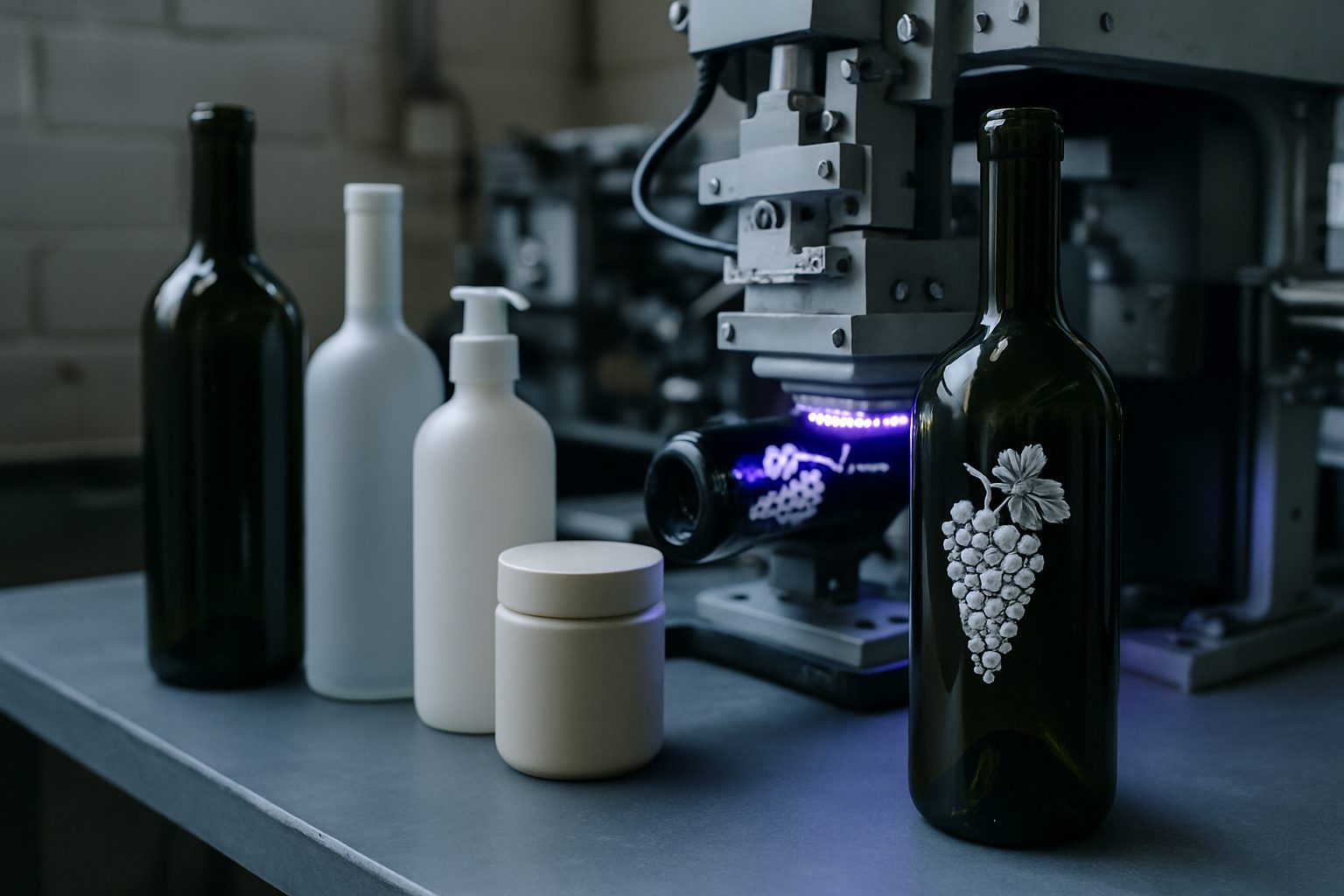
Wine estates across South Africa often ask how to move beyond paper labels with UV bottle decoration. Here we break down what works, what to avoid, and what to prepare before emailing us.

Keep exploring

Use Cases · Systems · Contact us.

Glass is the canvas

UV panels sit beside or instead of labels.

Handling first

GlassGuard Soft before any colour pass.

InkFlow varnish

Soft-touch or gloss for cellar door shelves.

What direct UV decoration means for estates

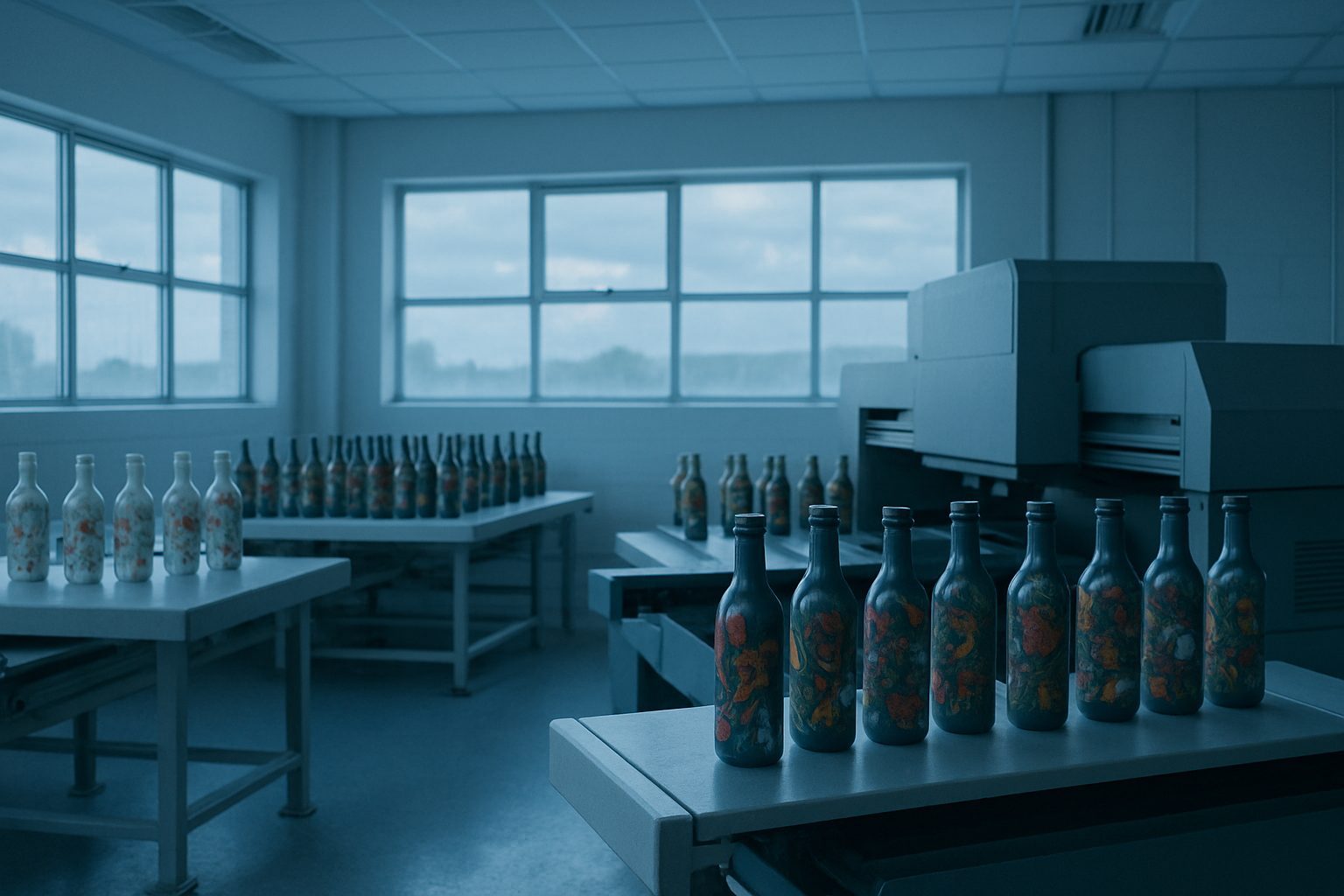
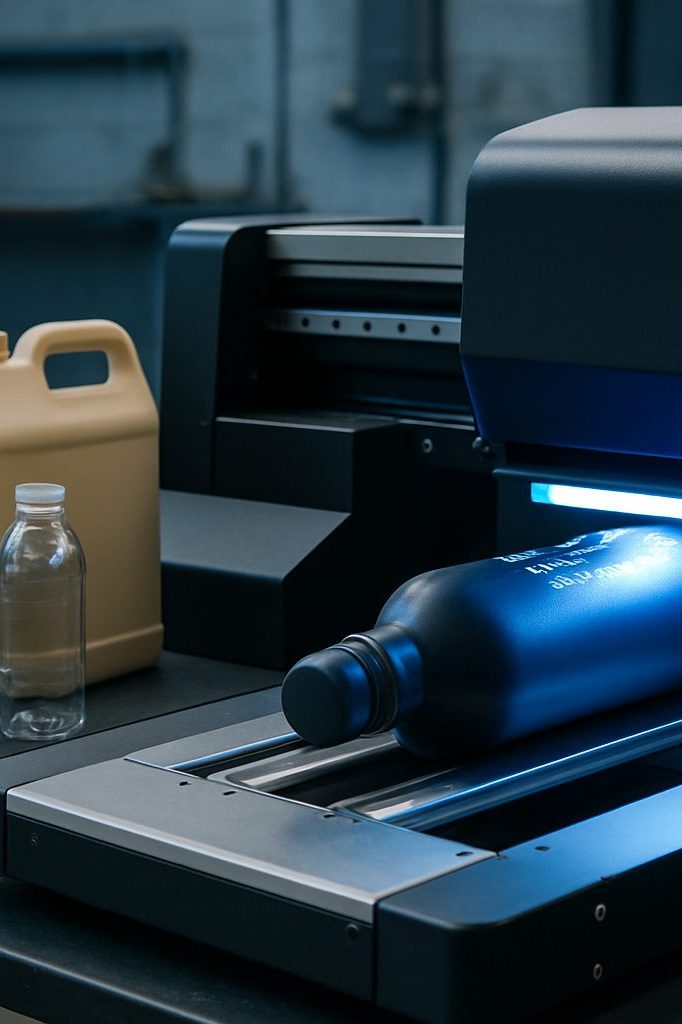
Direct UV printing puts the graphic or logo straight onto the bottle instead of relying on a self-adhesive label, foil or sleeve. This method suits estate bottlers in the Cape, Kimberley, and beyond who want lasting decoration that survives local packing, long transit, Highveld dust and coastal humidity. Patterns or brand marks become part of the glass or PET, resisting rub-off where labels would peel or show wear. For wine, gin, olive oil and other estate lines, this brings a premium shelf look without worrying about wet or chilled bottles causing label lift.

That said, it is not for every job. If you change each week’s artwork, stick to fast digital labels. If you want tactile finishes or foiling, those come from other kit. But for classic marks, short- or medium-run branding, or when nothing else will hold up in local bottle stores or on export, UV decoration is the honest tool.
Who this suits, and who it does not

Most estate teams who choose UV bottle decoration are looking for something that endures: estate wines, small-batch spirits, olive oils, or any craft beverage line where the branding must stay sharp after haulage from the winelands to Bloemfontein or Gauteng. It works best for teams with a stable product line and predictable volumes, or who want a recognisable finish with fewer moving parts.

It does not suit teams that need frequent artwork changes, very complex metallic effects, or extremely high speeds where large-scale offset or flexo lines rule. Early-stage projects or pop-up brands might find digital paper labels or sleeves simpler to manage, especially if timing or product constraints change week to week.

How we map estate jobs in practice

Before we recommend any finish, we always ask estate teams to start with the site or process constraint. In our experience in Cape Town and Kimberley, skipping this step is the main reason for drama and double-handling. Constraints could be access to three-phase power in a heritage cellar, odd bottle shapes, timing around load-shedding, or who controls the signoff. Once these are clear, we tailor our advice.

A typical flow starts with a clear one-page brief, including a site note and named on-site owner. We match the system to the constraint, walk the install plan with the operator who will run the job, then leave a close-out note so the next shift is not guessing. Our notes are always practical, not just what the catalogues show. If a previous job had adhesion issues with amber glass or a power fault due to a rural supply, we log it and make sure it is not repeated. You can read more about amber glass and UV ink or adhesion tests before a bottle launch if your bottles need extra checks.

A worked example: Cape estate line launch

A Cape wine estate recently needed 1 500 decorated bottles for a reserve red. They wanted a white mark, no label, and had a three-day window between racking and boxing for export. Site power was single-phase 230 V, and there was only one stable table near the bottling line. We set up a compact sample programme, brought test bottles, and ran adhesion checks against their regular cleaning process.

The operator signed off on the mark’s size and position in person. After the initial prints, we checked rub-off resistance under simulated truck vibration (for the N1). The result: bottles left the farm with the mark fully intact, and no surprise phone calls from the pack house. A simple one-pager, clear owner, and a close-out note meant the next year’s run needed only minor tweaks.

Checklist: what to send before you email

To get a practical answer, gather this set before dropping us a line. Even if you only have two photos, a short window and a contact, we can almost always start. Extra info just means fewer return calls.

Common pitfalls and how to avoid them

The biggest source of cost and lost time is skipping the site constraint step. If you pick a finish before mapping the power supply, fixture limits or the sign-off chain, you often land in last-minute trouble. Load-shedding, forgotten access windows, or odd bottle shapes can kill an install at the last metre. Be frank if you do not have every answer; we can usually fill the gap with a quick site call or floor photo.

Another pitfall is skipping adhesion tests, especially for bottles washed with non-standard detergents or in humid regions like Durban. Read how we run adhesion tests before a bottle launch or see checklists for short-run lines that pay back if you need numbers for budgets.

Next steps and how to reach us

Browse our use-cases or catalogue for related projects or finishes. When you are ready, send a message through our contact form with your brief and a reference to Estate bottles beyond labels. We answer from our Jet Park sample bay, and keep every answer tied to your site constraint and finish. If you want to pair estate jobs with other lines or have a short-run promo, mention that for context so we line up the right kit.

Talk to BottlePrinter Lab

Our contact form · Sunnyrock applications lab